|
Volume XII |
|
|

1- 8 6 6 - M Y Z I N D A
|
1-866-699-4632 | Fax 1-415-358-4778 | zcrew@zindamagazine.com
1700 Pennsylvania Avenue. NW Suite 400 Washington, DC 20006 U.S.A. |
|
|
|
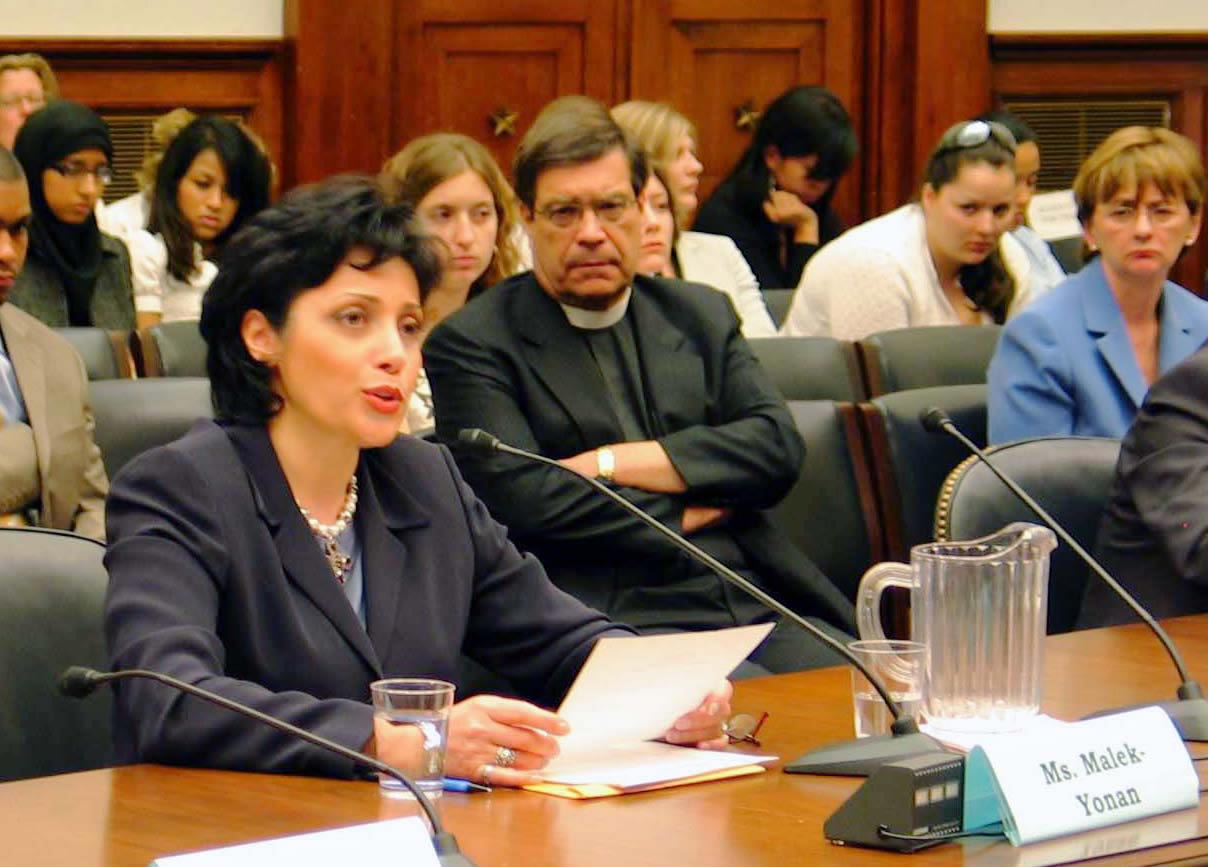
Rosie Malek-Yonan Goes to Washington
The author of The Crimson Field testifies: "We are Assyrians! We were Assyrians before we became Christians!”
|
|
|
|
Rosie Goes to Washington
One Woman. One Testimony. One Voice |
Waleeta Canon
Nina Georgizova |
|
|
Rosie Malek-Yonan's Statement Read Before the House Committee on International Relations on 30 June 2006 |
Zinda Special |
|
|
Kurds Block Assyrians, Shabaks FromPolice Force in North Iraq
Thousands of Assyrians Moving to North Iraq
Continuing Persecution Renews Calls for
Assyrian Safe-Haven
3000 Chaldeans Seek Better Life in Lebanon
Shabaks of Mosul Under Attack, Move to Nineveh Plain
Assyrian Intellectuals Organize Writers League in Baghdad |
 |
|
|
I Say, To Hell With Unity |
Mariam S. Shimoun |
|
|
Assyrian Universal Alliance Meeting in Canberra
Australian Senator Cites Assyrian in Her Speech to Parliament
Assyrian Participation at UN Indigenous Forum
UK Assyrians Honour British MP, Stephen Pound
"Speaking with 1 Voice": Seyfo Commemoration in Germany
Meeting of the AACF & Fr. Yusuf Sag in France
Assyrians of Las Vegas Raising Funds to Build First Church
AAS in Central Valley California Honors URMI Creators
Assyrian Civilization on Display at Shanghai Museum
Susan Nisan Creates Latin Program in Turlock
|
|
|
|
|
|
Happy Memorial Day from Baghdad
Christ is the Center
Taking a Stand When Necessary
They do not Hold a "Key" to Our Future
Your Holiness, Trust Your People And Not The Kurds!
Emergency Aid to Fleeing Assyrian Families
Searching For My Relatives in America |
Click to Learn More :
ZINDA CALENDAR
ZINDA ARCHIVES |
|
|
New Book: The Church of the East by Christoph Baumer
Zinda Readers Save 20% off Baumer's New Book
Coming Later in July: Fred Aprim's Most Anticipated Book
New Generation Assyrians Writing Competition 2006
|
|
|
|
The Forgotten Christians of Mesopotamia
Safety Zone, the Answer for Iraq’s Endangered Peoples
Little Brides Visit Homes on Kaalu d’Sulaaqa Festival
Better Than Reading a Book |
Alkan Chaglar
Tears of the Oppressed
Mikhael K. Pius |
|
|
UNESCO intends to Put the Magic Back in Babylon |
Jeffrey Gettleman |
|
Zinda Says
An Editorial by Wilfred Bet-Alkhas
|
Rosie Goes to Washington
Guest Editorial
Waleeta Canon
Washington DC
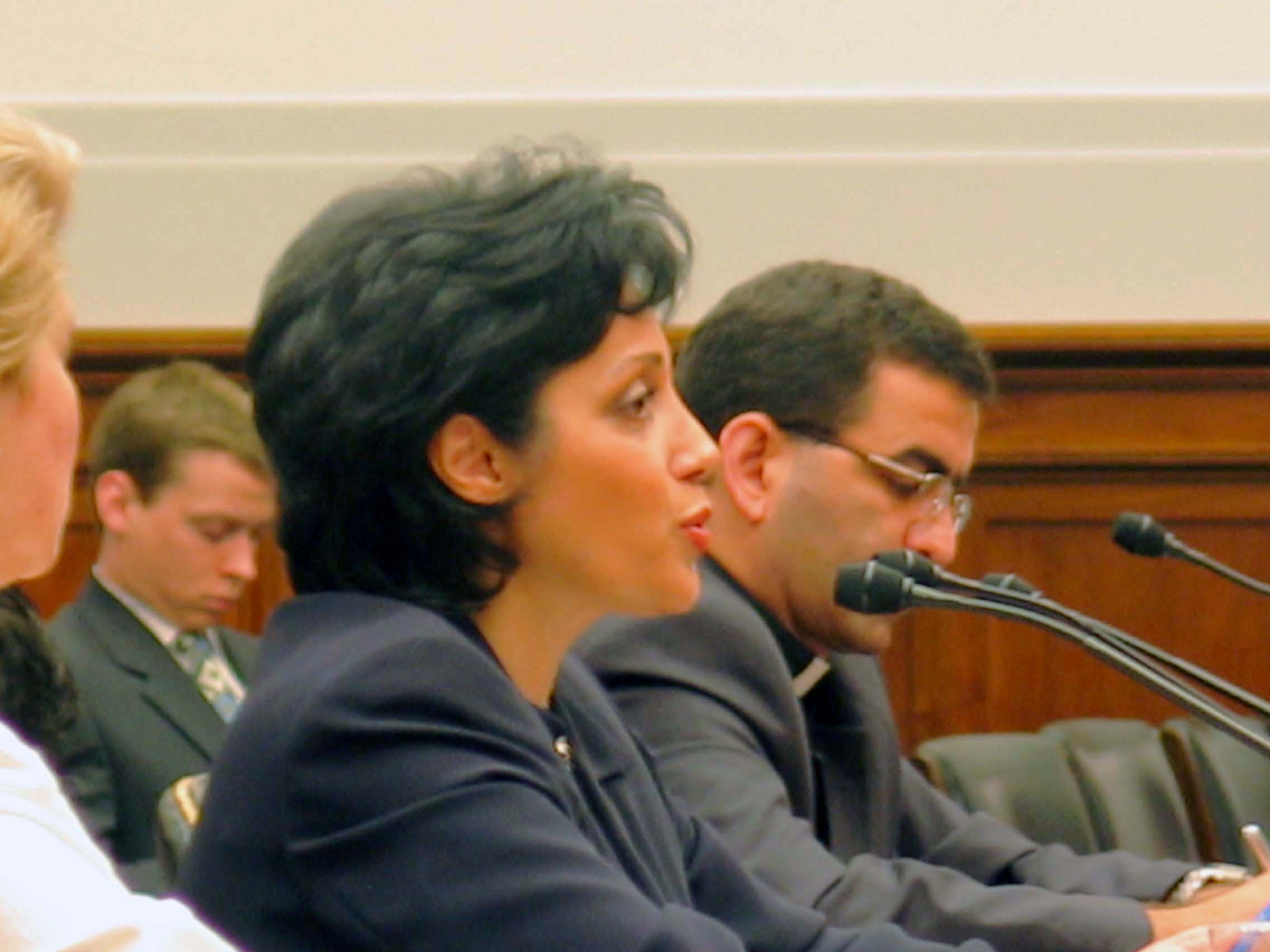
On Friday, June 30th, 2006, Ms. Rosie Malek-Yonan made a U.S. Congresswoman cry.
In the last 30 years of the Assyrian nationalist movement, little has been written or said that has moved the hearts of non-Assyrians. Rather than the usual dry, fact-filled speeches made by Assyrians in Diaspora pleading the case for the helpless Assyrians in the homeland, Ms. Malek-Yonan moved an entire room…and one Congresswoman to tears…with her words.
On the morning of June 30th, Ms. Malek-Yonan gave a powerful, riveting, emotional testimony before the House Subcommittee on Africa, Global Human Rights and International Operations – a Subcommittee of the House Committee on International Relations. The topic of discussion was the survival of religious pluralism. Chairman Christopher Smith (NJ) introduced Ms. Malek-Yonan as the author of “The Crimson Field”, based on the real events of the Assyrian genocide of 1914-1918.
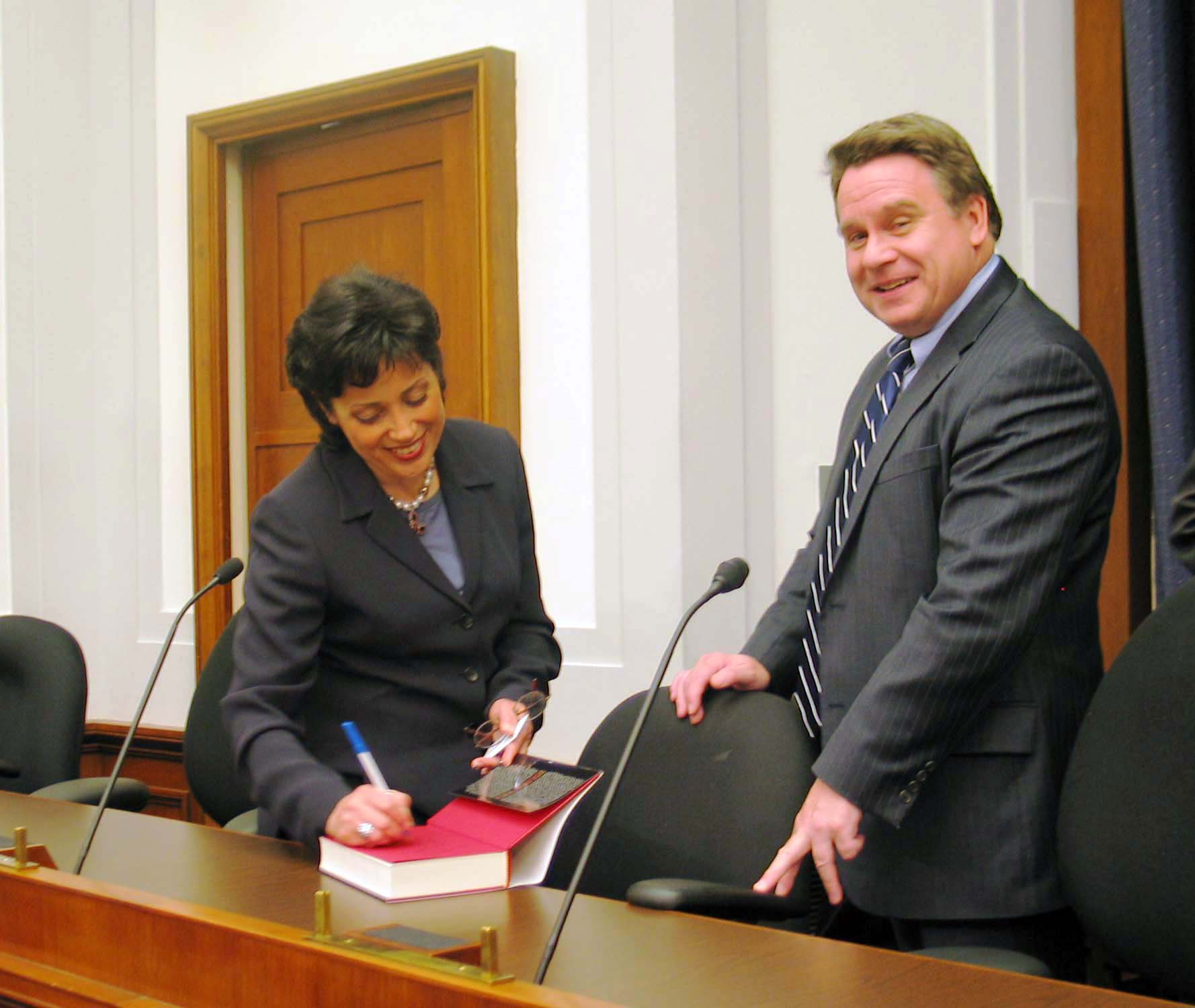 |
Rosie Malek_Yonan signing a copy of her book, The Crimson Field, for The Honorable Christopher H. Smith, chairman of the Committee on International Relations' Subcommittee on
Africa, Global Human Rights and International Operations. |
Ms. Malek-Yonan had the unique distinction of not being affiliated with any Assyrian political or civic organization. In her comprehensive account of human rights violations currently being committed against Iraqi Assyrians by Islamist Kurds and Arabs, she pulled together and discussed – in one 25 minute speech – the Assyrian genocide of 1914-1918, the 1933 Semele massacre, religious persecution and ethnic cleansing (supported by U.S. dollars being spent on the Kurdish government that is promulgating these attacks), Kurdish sponsored voter fraud in the 2005 elections, and the inherent contradiction between promoting democracy in adherence with “Islamic law” in Iraq, making the Iraq a dangerous place to live for Assyrians, who are Christians.
Put simply, Ms. Malek-Yonan dared to say what most simply won’t, for fear of retaliation against the Assyrians in the homeland, or sounding “too harsh” or “undiplomatic”.
The room had a large audience of Congressional staffers, people representing various NGOs, and the general public, and while all those who testified before the committee had compelling stories of religious persecution, Ms. Malek-Yonan took the issue of Assyrian a step further: She did not argue that Christians in Iraq were being persecuted and marginalized – she made it clear that Assyrians were being eradicated, ethnically and culturally cleansed, and were being wiped off the map.
And the world, for some mysterious reason, is completely ignoring it.
In no uncertain terms, Ms. Malek-Yonan exclaimed that the 2003 “liberation” of Iraq has become the “oppression” of the Assyrians – particularly in the Kurdish north. What little aid, she said, that has been earmarked for Assyrians is being funneled through the Kurdish authorities, used only to build up Kurdish villages. As a token gesture to proclaim “pluralist democracy” to their current Western allies – they build a few Assyrian churches to show, on paper, that money is indeed being spent on Assyrians, while in reality the Assyrian people themselves are left homeless, hungry, without water, sanitation, proper health facilities and personal security.
Ms. Malek-Yonan stressed that this recent mass exodus of Assyrians happened, among other reasons, due to the failure of securing a safe haven for the Assyrian population after coalition forces removed Saddam – whereas the Kurds had a place to go, and now are in a position to flood once-Assyrian villages with Kurds in order to claim population majorities in the North.
Her straightforward testimony made it clear that ethnic cleansing was happening under the watch of the U.S. presence, with U.S. tax dollars, while the Western media is silent on the matter. The Kurdish authorities and Islamists – Kurd and Arab – have free reign to do as they please in the chaotic Iraq, with the inhuman, barbaric crimes against Assyrian going undocumented and unnoticed.
 |
Ms. Malek-Yonan asserted the inherent contradiction in the Iraqi Constitution – Articles 2(A) and 2(B) claim that no law shall be passed that is in contradiction with democratic law, nor shall any law be passed in contradiction with Sharia law. This, she argued, is mutually exclusive. She quoted two Qu’ranic passages that dictate “He that chooses a religion over Islam, it will not be accepted from him and in the world to come he will be one of the lost” and to “slay [infidels] wherever you find them…Idolatry is worse than carnage”, as examples from Islamic theology supporting ethnic cleansing of infidels, and therefore, Assyrians.
It has become commonplace for Assyrians and non-Assyrians to plead the case of the Assyrians to the world by declaring we are the “indigenous Christians of Iraq”, believing that this can garner more support and sympathy from the West than saying “Assyrians” of Iraq. But during the question and answer session after her speech, Ms. Malek-Yonan made it quite clear – “(When the media refers to Assyrians in Iraq…) they say ‘Christians of Iraq’. We are not Iraqi Christians. We have a name. We need to be called by our name, not just generic Christians. We are Assyrian, and we want to be recognized for who we are.”
The lack of understanding as to what is truly happening to Assyrians in Iraq was revealed in a simple question asked by Congressman Smith; referring to a young Assyrian boy who was kidnapped and killed by Kurds, he asked, innocently, “Has there been an investigation launched (in Iraq) regarding this incident?”
Ms. Malek-Yonan’s testimony lasted almost half an hour, as she shocked the room with details regarding the state of Assyrians in their homeland, Western apathy, lack of media attention, and direct and indirect U.S. policy that supports the Kurdish regime committing gross crimes against humanity. She beseeched the U.S. lawmakers to give aid directly to the Assyrians, and not through an interim like the Kurdish authorities. She implored them to begin to take responsibility for the slow genocide happening under U.S. supervision. She expressed, quite candidly, that the so-called “democratic” Iraq is just that – “democratic” by name only.
She truly garnered the attention of the room in her closing paragraph:
“On 9/11 America experienced a reasonably small example of Islamic terrorism as compared to that with which Christians of the Middle East are familiar. The world watched in horror as we, the citizens of this great nation, mourned our loss. And the world mourned with us. How shameful it would have been if the tragedy of 9/11 had gone unnoticed. How shameful it is that the tragedy of the Assyrian genocide of the last century went unnoticed. How shameful it is that the current Assyrian massacres are going unnoticed”.
And it’s true – while the West is trying to figure out how to leave Iraq, and Assyrians in Diaspora are bickering about politics and official names – history is repeating itself in Iraq – and no one is noticing.
One Woman. One Testimony. One Voice
Guest Editorial
Nina Georgizova
Washington D.C.
One hundred fifty souls perished that black day. One hundred fifty souls that were accounted for. One hundred fifty souls that were loved by fathers and mothers. By sons and daughters. By sisters and brothers. By wives and lovers. One hundred fifty souls, each one of them with individual names, who were expected at dinner tables that evening. That night and every night, one hundred fifty chairs would remain unoccupied, each leaving an empty space in the hearts of a nation on the brink of total extinction. One hundred fifty candles flickered in the distance when angels swept the earth for their souls.
-excerpt from The Crimson Field by Rosie Malek-Yonan-
Assyrian women…Mothers, wives, sisters…They are beautiful beyond comparison, wise beyond limits, strong beyond comprehension and loving beyond understanding. They possess these amazing qualities that make them the foundation of our nation. Throughout the centuries Assyrian women have suffered through wars and genocides, famines and tragedies to support their men and care for their children. They may seem vulnerable and helpless at times, but when all is said and done, they are the foundation that keep the Assyrian nation alive.
One of these amazing women is Rosie Malek-Yonan, the author of The Crimson Field, an actress, a pianist, a figure-skater, a director, a daughter, a sister, and a friend. She is a beautiful woman with a great smile, petite physique, strong willed with a great heart.
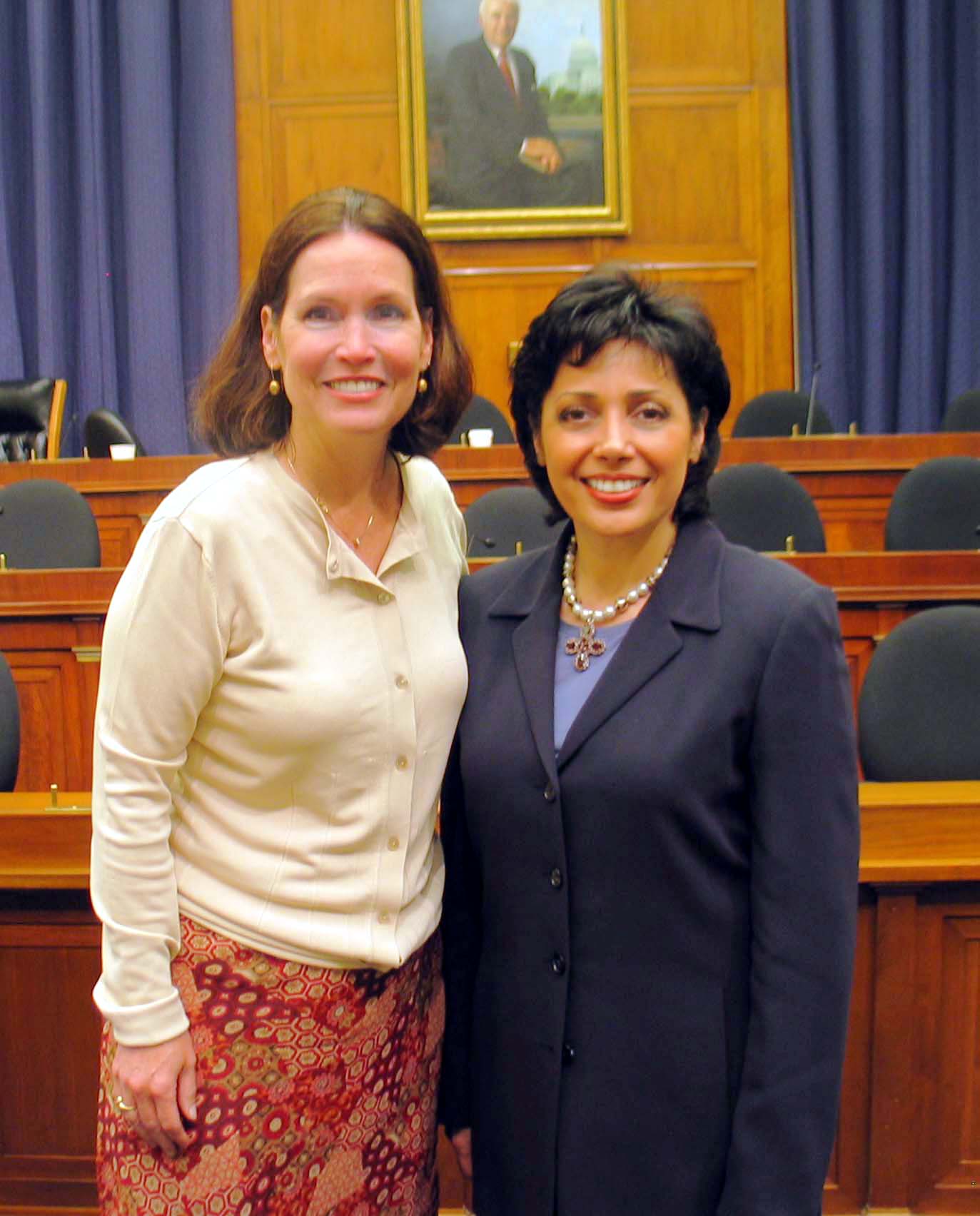 |
Congresswoman Betty McCollum and Rosie Malek-Yonan after the hearing last Friday at the Rayburn Hall Office Building in Washington D.C. |
I had the honor of being present at the Congressional Hearing on Friday, June 30 2006 in Washington D.C., a day I will never forget, when an Assyrian woman changed the destiny of her people, bringing them hope for the future and becoming their voice of truth. How different this experience was from everything that I have ever witnessed! In a world of politics, there is no room for passion and emotions, no room for love and compassion. Everything is calculated and planned. Our people, Assyrian people, are dying every day. Our children are murdered, mutilated, beheaded and tortured. Our mothers and sisters are raped and sold as prostitutes. We cry, we sigh, we feel sorry, but life goes on and we go back to bickering about name, churches and…nothing changes, everything stays the same. Our people are still dying, our children are murdered and mutilated, our mothers and sisters are raped and sold as prostitutes.
When I was getting ready to go to the hearing, I was not prepared for what I was about to witness. I was not prepared for Rosie’s courage, determination and passion. And I was definitely not prepared to see a Congresswoman, Ms. Betty McCollum, cry while she was talking to Rosie after the hearing.
Prior to Rosie’s speech, we listened to the testimony given by Ms. Nina Shea, Vice Chair of the US Commission on International Religious Freedom. While describing the situation in Iraq, she referred to us as “indigenous ancient Iraqi Christians.” I kept waiting for the name “Assyrian” to be mentioned, but alas, the speech was over and we remained as “the Christians of Iraq” in the eyes of the members of Congress and the public, as we are usually portrayed in the media. “We are ASSYRIANS! We were Assyrians before we became Christians!” I thought to myself. Still, I hoped that Rosie’s speech would clarify matters.
In response to a question from Mr. Christopher H. Smith, the Chairman of the Subcommittee on Africa, Global Human Rights and International Operations, Rosie noted: “We have a name. We are Assyrians. We need to be called by our name, not just a generic Christian. We have a name, and we want to be recognized as such.”
This experience almost seemed surreal and now, 24 hours later, I still have to pinch myself to make sure I am not dreaming. I was so glad that I was taking pictures during Rosie’s speech, in order to hide my teary eyes from the public. It took every bit of effort to hold back my emotions. I was watching the members of the Congress put their pens aside, listening attentively to what Rosie had to say. I was watching people in the audience, journalists, representatives of different organizations turn their heads in Rosie’s direction trying to grasp every word she said.
What she said was just simple truth. Yes, she was passionate and emotional, something you hardly see in the halls of Congress. But this is exactly what Assyrians in Iraq need. Those who died, those who are dying as I am typing these words and those who will die in the hands of Islamists and Kurds. Rosie voiced our pain, our suffering, and our truth, through stories of Assyrian children killed in Iraq, statistics of Assyrians fleeing our homeland, Iraq, and through an excerpt from her book. Simple yet powerful words. Chairman Smith acknowledged Rosie’s statement as containing “well-documented facts” and referred to it as a “powerful testimony.”
June 30, 2006, was one of the happiest days of my life. I left room 2172 at the Raybury Building where the Congressional Hearing was held with my head held high and full of hope for my people. One woman has accomplished more with a single testimony in the US Congress than all our political and religious leaders have in the last four decades combined.
Rosie, thank you for telling the world that I am more than just a “Christian in Iraq.” For telling the world that I am an Assyrian and that my people in my homeland continue to suffer under the oppression of the Islamic forces.
|
|
|
The Lighthouse
Feature Article
|
|
Rosie Malek-Yonan's Statement Read Before the
House Committee on International Relations on 30 June 2006
 On Friday, June 30, at 9:30 a.m. Eastern Standard Time, Rosie Malek-Yonan, author of The Crimson Field, testified on Capitol Hill before a Congressional Committee of the 109th Congress on religious freedom regarding the genocide, massacres and persecution of Assyrians in Iraq by Kurds and Islamists. She compared the Assyrian Genocide of 1914-1918, as depicted in her epic and historical novel The Crimson Field, to the current plight of the indigenous Assyrian Christians in Iraq. The complete written transcript of Rosie’s testimony has been made a part of the Official Records of Congress and was also made available to the press, along with copies of The Crimson Field. On Friday, June 30, at 9:30 a.m. Eastern Standard Time, Rosie Malek-Yonan, author of The Crimson Field, testified on Capitol Hill before a Congressional Committee of the 109th Congress on religious freedom regarding the genocide, massacres and persecution of Assyrians in Iraq by Kurds and Islamists. She compared the Assyrian Genocide of 1914-1918, as depicted in her epic and historical novel The Crimson Field, to the current plight of the indigenous Assyrian Christians in Iraq. The complete written transcript of Rosie’s testimony has been made a part of the Official Records of Congress and was also made available to the press, along with copies of The Crimson Field.
To view the webcast of Rosie Malek-Yonan's Congressional Testimony, please click here and fast forward to 2 hours and 11 minutes. You will need RealPlayer® to view.
My name is Rosie Malek-Yonan. I am not a politician. I am not a member of any political group or organization. I am an author. I am a Christian. I am an Assyrian. I am an American citizen. I am here to tell you about a 15 year old boy named Fadi Shamoon.
Fadi was happily riding the new bike his father had given him, when suddenly on that 5th day of October, 2004, he was yanked off his new bike and kidnapped by terrorist Islamist Kurds. His family went crazy wondering what had happened to little Fadi, until a neighbor found Fadi’s body thrown out on the roadside like garbage. He was in pieces. His body was barbarically mutilated and burned, and he was beheaded in a most horrific manner.
As unthinkable and unimaginable as this crime was, it wasn’t the first that the residents of the Assyrian district of Ba'asheeqa had seen. Just prior to this, the Assyrians had mourned another son, 14 year old Julian Afram Yacoub when he was hit in the head with a concrete block and then burned. Killing innocent Christian children has become fashionable in Iraq, forcing many Christians to flee their homes and villages, money-less and helpless.
In my recently published historical epic novel, The Crimson Field, I have relayed the factual atrocities that were unleashed on my people in the span of four years from 1914 to 1918, which wiped out two-thirds of my Assyrian population totaling some 750,000.
I have lost great grand parents, great uncles, great aunts, and many others. My people were victimized at the hands of the Islamist Kurds and Turks 91 years ago for being Christian. My people are still being victimized at the hands of the Islamist Kurds today for being Christian.
My churches are being bombed. My elders are being killed. My young brothers are being assaulted and kidnapped. My fellow students are being harassed and beaten. My children and neighbors are being beheaded. If my sister refuses to wear a Muslim hijab, she is raped or tortured by having acid thrown in her face. And yes, the majority of these incidents have gone unreported in the western media. These atrocities are occurring right under the watchful eyes of my American government since the “liberation” of Iraq.
March 16, 1918: “One hundred fifty souls perished that black day [at the hands of the Kurds]. One hundred fifty souls that were accounted for. One hundred fifty souls that were loved by fathers and mothers. By sons and daughters. By sisters and brothers. By wives and lovers. One hundred fifty souls, each one of them with individual names, who were expected at dinner tables that evening. That night and every night, one hundred fifty chairs would remain unoccupied, each leaving an empty space in the hearts of a nation on the brink of total extinction. One hundred fifty candles flickered in the distance when angels swept the earth for their souls.”
That was an excerpt from my book, The Crimson Field. I could have very well been writing about the plight of today’s Assyrians in Iraq. History is repeating itself and no one is taking notice; No one except my people.
We Assyrians are a nation without boundaries. For thousands of years we have survived by sheer will power. Nearly a century ago, in the shadows of WWI, my grandparents struggled to survive to save future generations of Assyrians from extinction. Now that burden is mine to carry. Now my generation faces that same struggle to save my nation from total extinction in Iraq. We care about the preservation of the bald Eagle and strive to save it from extinction. We pass laws forbidding the hunting of a bald Eagle. Yet we allow the oldest nation in the world to become extinct. This is unforgivable.
Assyrians, like myself, living in diaspora in our adopted countries, are doing what we can to bring awareness to the plight of our people. We’re not soldiers. We can’t take up arms and fight in the streets of Baghdad. But we write books and articles, hold lectures, and make documentary films. We hold vigils and debates. We march. We go on hunger strikes and peaceful demonstrations. We hold rallies. We speak.
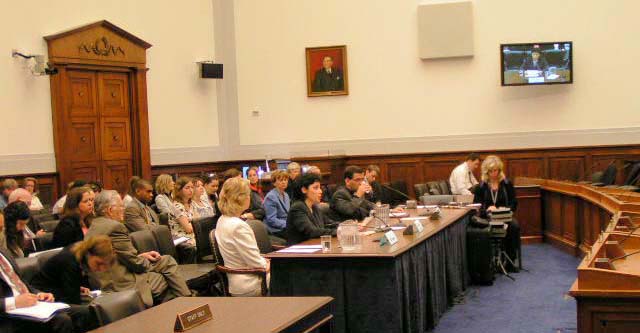 |
| Malek-Yonan testifying before the Subcommittee on
Africa, Global Human Rights and International Operations in Washington D.C. on 30 June 2006. |
When you gain knowledge of atrocities occurring, you are in essence baring witness to those facts and as such, you inherit the absolute responsibility to testify to and alleviate those human miseries.
We Assyrians are not extraordinary people. But we are caught up in the cross fires of extraordinary events. And yet we don’t fight violence with violence. We don’t retaliate. Because we just want to live. When our churches are bombed, we don’t think of retribution. We walk away as Christians should.
Just this week, 7,000 Assyrians left Baghdad for Northern Iraq. The women and children have taken refuge in other Assyrian homes, while the men sleep in the cemeteries at night. I don’t mean figuratively. I mean literally. They sleep in the cemeteries because they have no other shelter. These suffering Assyrians in Iraq depend on our courage in the western world to help them.
A few months ago, I met with Mar Gewargis Sliwa, the Assyrian Archbishop of Iraq from the Assyrian Catholic Church of the East. His account of the lives of Assyrian children in Iraq was appalling and heartbreaking. He said to me, “We can’t help our children anymore. They play in fields of blood. We are a poor nation. We need help. Help us.”
"Today’s Middle-East must become ethnically balanced. Just like there is a Jewish state, and an Arab state, there is a need for a Christian state."
|
Just days ago I spoke with His Holiness Mar Dinkha IV, the Patriarch of the Catholic Assyrian Church of the East, who told me that the priests in Iraq can no longer wear their clerical robes in public. They have to dress as civilians otherwise they are targeted and attacked by Islamists.
Today’s Iraq was once part of Assyria. Assyria was the first nation to accept Christianity. The Assyrian Church was founded in 33 A.D. Today, my Assyrian nation’s future is in serious trouble. Iraq’s Assyrian population of 1.4 million before the Iraq war has now dwindled down to nearly 800,000 with no one protecting their interests.
Though Assyrians are the indigenous people of Iraq, they are now either being victimized and killed, or being driven out of their homeland. Their practice of the Christian religion is not being tolerated or allowed by the terrorists and Islamist Kurds. Acts of violence and aggression towards the Assyrian Christians of Iraq are frequent occurrences. For example, Assyrian churches are prime targets of anti-Assyrian/anti-Christian campaigns, killing and injuring many Assyrians. From 2004 to June 2006, 27 churches were attacked or bombed for the sole reason that they were houses of worship of Assyrian Christians. On one occasion, 6 churches were simultaneously bombed in Baghdad and Kirkuk, and on another occasion an additional 6 churches were simultaneously bombed in Baghdad and Mosul. Simultaneous church bombings is a recurring pattern.
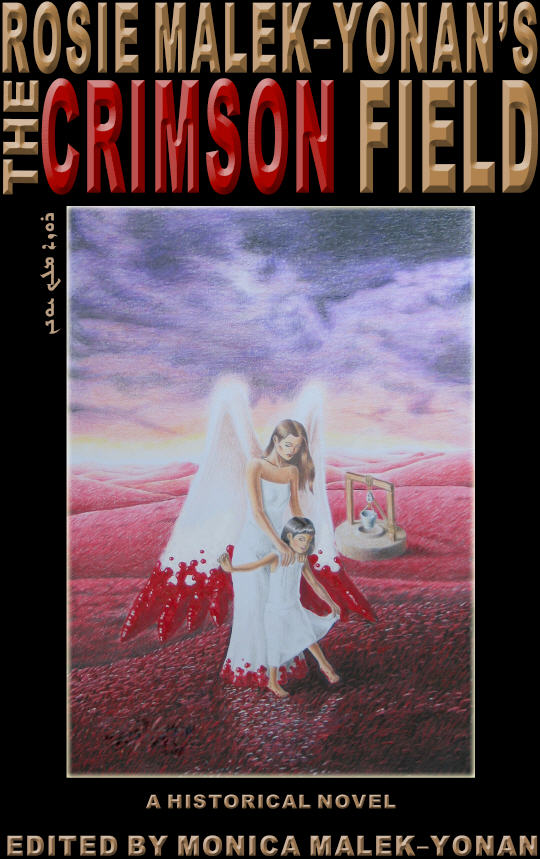
Click Book Cover For More Info |
Despite the push for Iraq to become a democratic country, the unthinkable brutality of Saddam Hussein has now shifted and is being unleashed onto the Assyrians by Islamic fundamentalists and the Kurdish power that is rapidly rising in Iraq since the new so-called “democratic” Iraq emerged. I say “so-called” because it is not democracy when election fraud and intimidation runs rampant.
For the first time in Iraq’s history, Assyrians were able to take part in the January 2005 elections. But thousands of Assyrians of the Nineveh Plain did not get a chance to vote. In the Assyrian towns and villages, ballot boxes did not arrive and Kurdish officials in charge of the voting process never showed up. There are numerous accounts of ballot box thefts. Where Assyrians could vote, the armed Kurdish militia and secret police made their presence known near the polling stations, intimidating the already frightened women and elderly Assyrians. And in Assyrian provinces, Kurdish votes were generated in abundance in place of Assyrian votes.
Today in war-torn Iraq, being denied their most basic human rights, these ancient and indigenous people continue to be the target of systematic oppression, murder, intimidation, kidnapping, and violence. Assyrians in Northern Iraq are marginalized by Kurds who have gained momentum and are exercising the same brand of violence they once complained of during Saddam’s dictatorship.
Since the start of the Iraq war, various Eastern media outlets have steadily reported some, but not all of the violent crimes perpetrated against Assyrians. I have a mere sampling of these crimes attached to my Statement, which you have before you. However, most of these crimes go undocumented and unreported in the Western media. The fact that such cases are falling through the cracks does not in any way diminish their validity and legitimacy. Reported or not, when basic human rights are violated, crimes against humanity have been committed.
ARE YOU COVERED? |
 |
ATO INSURANCE
Click Image For More Information
Auto | Homeowners | Business | Health | Life |
|
Other examples of Assyrians being marginalized can be found in the newly drafted Iraqi Constitution’s Preamble. The Arabs, Kurds, and Turkomans are specifically mentioned, whereas Assyrians are omitted. Additionally, the Preamble cites atrocities against the Kurds but completely ignores those against the Assyrians during Saddam’s regime as well as the 1933 Assyrian Massacre in Semele, Iraq.
Iraq’s “liberation” has become the “oppression” of Assyrians. The war in Iraq is silently taking its toll on the Assyrians particularly in the Northern regions of Kirkuk, Mosul and Baghdad where the Assyrian population is concentrated. In the Nineveh Plains and its surrounding regions, under the Kurdish Regional Government (KRG), and through a dictatorship, Assyrian lands are being illegally confiscated.
And yet the Assyrians don’t strike back. We remain peaceful and tolerant under intolerable conditions.
There is no aid or funding going to the Assyrian regions under our American watch. Basic medical need is non-existent for these Christians. A woman cannot have a c-section in her neighborhood. She has to drive miles away and risk her life and the life of her unborn child to receive medical care.
We, Assyrians, are not asking for anything beyond the aid that is already going to Iraq for redevelopment. But we are asking that Assyrians proportionally receive aid sent to the Assyrian regions.
In Northern Iraq, millions of dollars in funding by the United States are assigned to be over looked by Kurdish political parties who are primarily using these monies for their own advantage instead of a fair and equitable distribution of much needed funds to the Assyrian leadership to be used to aid Assyrian communities that are in dire need.
Today Assyrians are one of the most vulnerable minorities in the world. Under our watch, the largest Assyrian exodus is underway. It is estimated that if things continue to proceed as they now are, within 10 years, the Assyrian population of Iraq will be eradicated because of the ethnic cleansing, the forced exodus, and migration.
The indigenous people of the United States, the American Indians, have their human rights secured in their homeland in America. The indigenous people of Iraq, the Assyrian Christians, are being driven out of their homeland.
The displacement of Assyrians has become a seriously overlooked issue. During the Gulf War thousands fled to Jordan. In 2003, during the early stages of the Iraq War, gripped by fear, 40,000 to 50,000 Assyrians fled to Syria. Since then, thousands have been leaving Iraq because of the threats they have received. Homeless and living on the streets of Syria and Jordan, Assyrians helplessly await assistance.
According to Statistics from the United Nations High Commissioner for Refugees (UNHCR) in October 2005 about 700,000 Iraqis fled to Syria. Between October 2003 and March 2005, 36% of these refugees were Christian Iraqi. That’s 252,000 Assyrian Christian refugees.
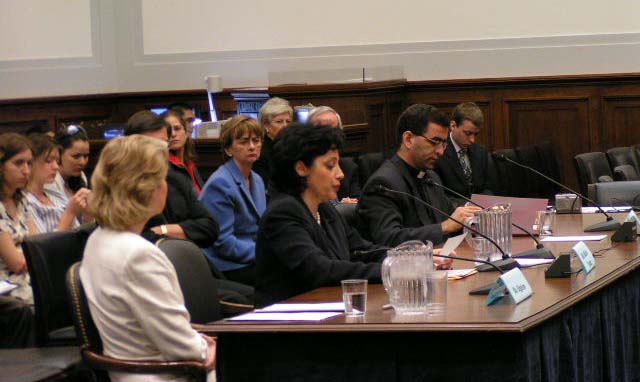 |
Rosie Malek Yonan on June 30th: "We Assyrians are a nation without boundaries." |
When the Iraq war started, Assyrians did not have a “safe region” to go to within Iraq so naturally they ran to neighboring countries like Syria and Jordan. But since Assyrians are not displaced internally in Iraq, they no longer qualify for the current “displacement” assistance program. These Assyrian refugees who once led productive lives in Iraq, have resorted to begging, slavery, prostitution, and selling organs just to survive and feed their families. This is happening under our watch in America. The flip side of this is that millions of displaced Kurds are returning with assistance to settle back into their own regions because they, unlike the Assyrians, had a “safe region” to run to within Iraq. We must balance this.
"Christians having chosen a religion over Islam are considered infidels and idolaters... And so, Christian Churches are bombed and Christians are slain; Assyrian Christians"
|
It is an undisputable fact that Mesopotamia is the cradle of civilization and that the Assyrian Christians are the indigenous people of Mesopotamia, present day Iraq. It is also undisputable that Assyrians are a part of the fabric of today’s Iraq, enduring under the constraint of Sharia or Islamic law though an in-name-only democratic Iraq.
Article (2)b of the Iraqi Constitution states: “No law can be passed that contradicts the principles of democracy.” Article (2)a of the Iraqi Constitution states: “No law can be passed that contradicts the undisputed rules of Islam.” These two articles are in contradiction with each other.
One of the rules of Islam, which can be found in the Koran at Chapter 3, line 19, states: “The only true faith in God’s sight is Islam.” In Chapter 3, line 86, the Koran states: “He that chooses a religion over Islam, it will not be accepted from him and in the world to come he will be one of the lost.” Christians having chosen a religion over Islam are considered infidels and idolaters. In Chapter 2, lines 190 to 193, the Koran dictates to all Muslims to “Slay them wherever you find them. Drive them out of the places from which they drove you. Idolatry is worse than carnage.” And so, Christian Churches are bombed and Christians are slain; Assyrian Christians.
Despite being the indigenous people of Mesopotamia, Assyrians are discriminated against and treated as unwanted guests in their own homeland as they face the threat of yet another modern-day ethnic cleansing by the Islamist Kurds that is reminiscent of the ethnic cleansing of nearly a century ago exercised by the then Ottoman Turks and Kurds.
Today’s Middle-East must become ethnically balanced. Just like there is a Jewish state, and an Arab state, there is a need for a Christian state.
Although Chapter 4, Article 121 of the Iraqi Constitution entitled “Local Administrations” guarantees the administrative, political, cultural, educational rights for the various ethnicities such as Turkomen, Chaldeans, Assyrians, and the other components, this law exists in theory only, and not in practice.
With the Iraqi government’s suppression of the rights of Christians, Assyrians are looking to international communities and the western world in particular to the U.S. and U.N. to intervene on their behalf, enabling them to establish their own Assyrian Administrative Region in the Nineveh Plain in order to become, once again, a thriving and healthy community in Iraq. This Assyrian Administrative Region will witness the return of the Assyrian refugees to their ancestral homeland. However, this measure must be taken now. This is not an issue that can be placed on the back burner.
The endangered Assyrian civilization that managed to survive under Genghis Khan, WWI and WWII, is now spiraling out of control towards complete obliteration due to the present ethnic cleansing, assimilation and forced migration and refugee exodus.
On 9/11 America experienced a reasonably small example of Islamic terrorism as compare to that with which Christians of the Middle–East are familiar. The world watched in horror as we, the citizens of this great nation, mourned our loss. And the world mourned with us. How shameful it would have been if the tragedy of 9/11 had gone unnoticed. How shameful it is that the tragedy of the Assyrian genocide of last century went unnoticed. How shameful it is that the current Assyrian massacres are going unnoticed.
To view a list of Assyrian Christians victimized in Iraq, compiled by author Fred Aprim, click here.
|
|
Good Morning Assyria
News From the Homeland
|
Kurds Block Assyrians, Shabaks From
Police Force in North Iraq
Courtesy of the Assyrian International News Agency (AINA)
24 June 2006
Earlier this year, at the request of the local Assyrian (also known as Chaldean and Syriac) and Shabak communities of the Nineveh Plain, and the local police force of the Hamdaniya and Telkaif districts, the Ministry of Interior gave the order to assign approximately 800 new policemen from the local communities in the two Nineveh Plain Districts. This was long overdue as these two districts have a substantially low number of policemen to maintain security in the region. In addition, over fifty percent of the anemic police force in this region is made up of Kurds from outside the area who are loyal to the Kurdistan Democratic Party (KDP).
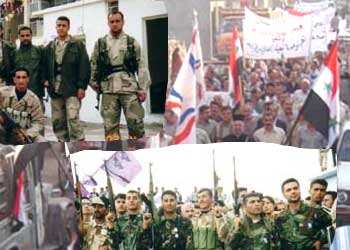 |
The first order from the ministry was handed down on March 14th, 2006. With a second official order dated April 6th, 2006, the approved applicants were asked to report for duty immediately. However, the Provincial Council of Nineveh, headed by Police Chief Wathiq Muhammad Abd Al-Qadir, has continually delayed the implementation of the ministry's order in the hopes of maintaining KDP control over the region. The Provincial Council of Nineveh is dominated by the Kurdish KDP even though the majority inhabitants of the area are Sunni Arabs, Shiite Shabaks, and ChaldoAssyrian Christians,
After several complaints from the locals, the order was finally implemented on June 14th, 2006, but with the modification that the Nineveh Plain approved applicants report for duty not in their Nineveh Plain hometowns but instead in the most troublesome neighborhoods in the city of Mosul.
The revised order gives the 800 Assyrian Christian and Shabak applicants two weeks to report for duty or their already approved applications will be revoked and rendered invalid. The Mosul city police stations where the new recruits are to report for duty already have assigned to them over 3,000 policemen from the Gayyara district. So far, none of the newly approved applicants have reported to Mosul in protest to the unjust alteration of the order to serve in Mosul rather than in their own towns and villages. Security personnel in the two Nineveh districts number a small fraction as compared to the 3,000 strong Police Force in the Mosul neighborhoods where the new recruits are to be deployed.
A complaint letter (English, Arabic) was formally filed with the Nineveh Provincial Council by the Assyrian and Shabak applicants, objecting to the revision to the order which only serves the political ambitions of the KDP and ensures its control over ever increasing parts of Nineveh and of its native inhabitants. No other region in Iraq has been subjected to such unreasonable demands. In all other urban centers and rural towns and villages the police forces are comprised mainly of local residents who man the local police stations and protect their hometowns.
HELEN TALIA
Financial Services
Specializing in Small Business Accounting |
|
- Payroll Preparation
- Sales Taxes
- Property Tax
- Financial Statements
- Tax Preparation
- Accounts Payable & Receivable
- Billing
- Bank Reconciliation
|
Call Today for a FREE consultation to educate & instruct you on the choices of accounting methods available to you & permissible by law.
Detail Oriented Work Ethics.
Good Judgment. Honest & Trustworthy
|
847-338-7254
htalia@yahoo.com |
942 Brunswick Circle Schaumburg, IL 60193 |
|
With its usual aggression and political maneuvering, the KDP is betting that it can continue its dominance over the Nineveh Plain by infiltrating and controlling the police force. The KDP's excuse, which is rejected by the locals, continues to be that the locals are too afraid to police the area, and so they are forced to bring in KDP militia personnel from the outside. Such blatant suppression of the rights of Assyrians along with notorious KDP aggression have become the trademark of tribal warlord Masoud Barzani in the relentless pursuit of his dream of an independent Kurdistan. To be sure, Barzani has been listening to those who have been advising him that an independent Kurdistan is not viable without the oil-rich areas of Kirkuk and the Nineveh Plain.
Kurdish Prime Minister Nechirvan Barzani further demonstrates the KDP's plan to annex Assyrian and Shabak towns when he publicly labels them as "Kurdish towns". In his interview on June 3rd, 2006, Asharq Al-Awsat writes "He emphasized that democracy is part of everyday life in Arbil, Dahuk, Al-Sulaymaniyah, Ba'shiqah, Al-Qosh, Barzan, Bartalah, Zakho, and the remaining Kurdish cities and villages."
The head of the Political Bureau of the KDP and the Provincial Deputy Governor of the Nineveh Governorate, Khisro Goran, has set up KDP offices in even the smallest villages in the Nineveh Plain. He says of the blue-uniformed Iraqi police "They are not much good at finding terrorists...because they are terrorists themselves." In the December 15th General Election, in the Assyrian town of Bartilla, approximately 500 non-resident Kurds had entered the polling center at 11:30 a.m. and demanded to vote. When the director refused, Mr. Khisro Goran, ordered the director to allow the illegal vote. Over 200 voted by the time Coalition forces intervened to stop further illegal voting.
Thousands of Assyrians Moving to North Iraq
(ZNDA: Baghdad) Statistics released on 22 June by the Assyrian Aid Society estimate that 1331 ChaldoAssyrian Christian families ( 5561 persons) have already fled Baghdad, Mosul, Basra, Ramadi, and Kirkuk and relocated in towns and villages in northern Iraq. The Christians are fleeing because of the lack of security or forced migration. The statistics are as follows:
Area in North Iraq |
# of Families |
| Dohuk |
449 |
| Barwai Bala |
119 |
| Mulla Barwan |
19 |
| Aqra |
52 |
| Zakho |
429 |
| Sapna |
263 |
Other AAS statistics show that in the last six months some 700 ChaldoAssyrian families have moved to the Nineveh Plain, an area tucked between the Kurdish-dominated north and the Sunni center. These families were distributed as follows:
Area in Nineveh Pl. |
# of Families |
| Tellesqof |
188 |
| Qaraqosh (Baghdeda) |
160 |
| Alqosh |
159 |
| Telkaif |
80 |
| Bartella |
75 |
| Shekhan |
16 |
| Karamles |
15 |
| Ba'sheqa |
7 |
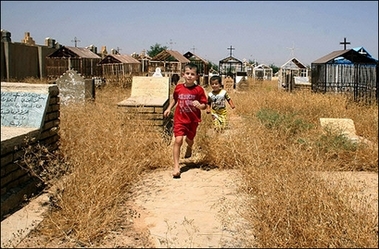 |
Assyrian children playing in the cemetery of Ankawa near Arbil where more than 3,500 Christian families have fled to from Baghdad, based to Kurdish statistics. According to sources to Zinda in Arbil, a $3 million building project is underway for the Patriarchate of the Assyrian Church of the East in the same area, a gift of the Kurdish Regional Government to His Holiness Mar Dinkha IV. (AFP/Safin Hamed) |
The number of families leaving their homes, added the AAS, would increase as schools come to a close for the summer break.
The AAS has requested assistance from the governmental and humanitarian institutions and from the ChaldoAssyrian Syriac people to accommodate and help the migrant families.
The AAS stated that it could accommodate some families, but its resources are limited and there are lodging problems, high rent, in addition to food ration supply problems, as more people relocate or move around, in addition to the arrival of the hot summer season.
Continuing Persecution Renews Calls for
Assyrian Safe-Haven in Iraq
Courtesy of the Assyrian International News Agency (AINA)
9 June 2006
Assyrian Christians (also known as Chaldeans and Syriacs) continue to be targeted within Iraq. Recent attacks have highlighted the varied groups perpetrating the attacks. On March 17, 2006, Kurdistan Democratic Party (KDP) paramilitaries broke into Mr. Slewo David Simon's home in Batnaya, a Christian town in Northern Iraq. Mr. Simon had recently emigrated to the US after a series of altercations and incidents with KDP militants. As the armed assailants broke into the home, Mr. Simon's neighbors Mr. Nabil Jaro and his brother Mr. Faris Jaro interceded to prevent the break-in and looting.
Later that afternoon at 5 pm, KDP personnel dressed as Iraqi National Guards forcibly entered Mr. Nabil Jaro's home. The KDP paramilitaries ransacked Mr. Jaro's home, broke his furniture, and confiscated his gun. Mr. Jaro was then roughed up and arrested as his terrorized family looked on. Mr. Jaro was then taken to the KDP occupation center in Tel-Kaif in the Nineveh Plain on trumped up charges of terrorism. KDP officers then served Mr. Faris Jaro with an arrest warrant and indicated that his brother, Mr. Nabil Jaro, would not be released until he turned himself in as well. The next day, Mr. Faris Jaro turned himself in, accompanied by his terrified elderly mother and another brother. Two KDP officers along with two other KDP personnel proceeded to severely beat both brothers for several hours while shouting derogatory anti-Christian and anti-Assyrian insults.
 |
Fearing that her sons may be killed, the mother pleaded with her sons to apologize to their attackers in order to be released. Following an apology under duress, the brothers were released. Their neighbor's home has since been expropriated as the new KDP party office in Batnaya in the Nineveh Plain. The establishment of a KDP party office in an area without any Kurds is widely believed to be intended to "bring Christians in line" and dampen enthusiasm for any independent political expression.
Assyrians in other parts of Iraq have not fared much better due to a steadily deteriorating security situation (AINA 4-28-2006).
According to Voices of Iraq, the director of operations for the Nineveh governorate police stated during his briefing on June 5th, 2006, that another Assyrian has been murdered by armed gunmen in the city of Mosul. According to nearby shop owners, the director said, the unidentified gunmen entered Ms. Rahima Elias' shop, one of many in the commercial part of town, and opened fire immediately killing her. Mr. Elias owned a beauty supplies store in the Drakzliya District located west of the city of Mosul. The 33 year old was a native of Karimles, a ChaldoAssyrian town approximately 18 miles east of Mosul.
On April 6, Mr. Samson Awisha was walking home in Baghdad when five men came out of a car and shot him dead. Earlier, presumably the same group of assailants had kidnapped Mr. Awisha's two children for ransom. After paying the ransom, Mr. Oisha's children were released and then quietly sent out of Iraq to Syria along with their mother for safety. The kidnappers had demanded that Mr. Awisha not take his children out of the country. After the murder, Mr. Awisha's family was threatened not to hold a funeral service lest the entire family be targeted. Mr. Awisha was laid to rest secretly and quietly, without a funeral.
On May 30th, 2006, Ankawa.com and Nirgalgate.com reported that Ra'ad Joseph, born in 1976, was found murdered in the Industrial quarters of Mosul. Mr. Joseph was from Bartella in Northern Iraq. Mr. Joseph was married with one child and was an owner of a bodybuilding gym. Reports from Mosul indicate that the murder is suspected to be an act of revenge as the decision of ownership of the gym was awarded him after public bidding for the gym. He was threatened by the Kurds to withdraw his bid but he refused.
On June 2nd, 2006, Ankawa.com and Nirgalgate.com also reported that the Evangelical Church of Ascension was attacked by a rocket bomb the night before. The bomb caused damage to the church building and caused a gaping hole in the church dome. No injuries were reported because the attack happened during the night.
On June 3, 2006, Ankawa.com and Iraq4allnews.dk reported that armed men murdered a Christian engineer in front of his home in Basra the previous night. The Christian engineer, whose name has not yet been released, worked at the al-Najeebiyya Electrical Circuit Station in al-Ma'aqal. The murder seems to be due to religious reasons since the engineer was a Christian and there have been many killings against Christians in Basra and much effort made to force them to leave the city.
Assyrians are now in an untenable position, being targeted by many sides of an increasingly violent conflict in Iraq. Assyrians are targeted in northern Iraq as well as other areas. As one activist noted, "Christians are now targets of Islamic groups, gangs who accuse them (Assyrians) of links to the West, and the Ba'athists and nationalists who view them as traitors."
In their October 2005 report, the United Nations High Commissioner for Refugees (UNHCR) noted what Assyrians had already known, namely, "While much of the hardship and harassment they (Assyrians) report that they face is symptomatic of the situation of general insecurity faced by all Iraqis in present-day Iraq, members of the Christian minority nevertheless appear to be particularly targeted. Iraqi Christians feel especially apprehensive about the overwhelming presence of extremist Islamic groups and armed militias, whose display of intolerance towards non-Muslims has become a nearly daily feature in Iraq."
Another report by Refugees International (RI) dated November 5th, 2005 noted that over 500,000 Iraqi refugees had left Iraq by November 2005. According to RI, the UNHCR is unable to register all refugees, but that of the Iraqi refugees registered in Syria "Nearly half... are Christians, although Christians comprise only about 5% of the population in Iraq."
In an earlier statement, the World Evangelical Alliance Religious Liberty Commission labeled Assyrians "endangered," stating "As people, groups, and whole communities start to identify by religious affiliations other than their common Iraqi nationality, the Christian minority find themselves increasingly despised, marginalized, and exposed. They are endangered, without equality before the (Islamic) law, having no clan networks and retaliation ideology, and lacking security in a lawless Islamic society." (AINA 2-7-2006)
While Assyrians recognize the general insecurity afflicting most Iraqis in and around Baghdad, the continued harassment and attacks in their homes in the north have been doubly taxing. Although some Assyrian families have fled from Mosul, Baghdad, and Basra back to their ancestral villages in the north, most -- as the UNHCR reports have documented -- have instead chosen to leave Iraq entirely. What had been designated a destination point for internally displaced Assyrians has instead been hijacked by KDP militants.
The example of the Jaro brothers illustrates difficulties faced by Assyrians living under a brutal tribal KDP occupation. As one analyst noted, "The confiscation of the Jaro home shows a double tragedy for the community. On the one hand, yet another family has forcibly and violently lost their home to KDP thugs with no recourse to the authorities. On another level, the entire community of Batnaya is now subjected to an armed KDP occupation."
The continued KDP hegemony into still more historically Assyrian areas has further increased tension between Assyrians and the tribal Behdanani Kurds of the KDP. According to the Transitional Administrative Law (TAL) and the Iraqi Constitution, Kurdistan Regional Government (KRG) administration and occupation would only extend to areas occupied by Kurds prior to the war. The steady encroachment of KDP paramilitary militants beyond the KRG occupied areas is viewed as illegal and provocative. One Assyrian leader recently asked, "There are no Kurds here; why do they need an armed presence to terrorize our people here?"
With the growing conflict following the Samarra mosque bombing on February 22nd, the already disproportionate impact on Assyrians has only intensified. The increasing insecurity and subsequent exodus of Assyrians has reinvigorated calls for an Assyrian Administered area. As one analyst summarized, "Only an Assyrian Administered Area, a safe zone in the Nineveh Plain that is secured by Assyrian police, will ensure the confidence of the populace to stay."
3000 Chaldeans Seek Better Life in Lebanon
Courtesy of ADN Kronos International
6 June 2006
(ZNDA: Beirut) Impoverished and living in Lebanon illegally - many of the 3,000 Iraqi Chaldean Christians who have fled their homeland now dream of a better future abroad with Australia the most desired destination. Most of the refugees left Iraq in the wake of the US invasion of the country and while the bloody sectarian stuggle that followed has mostly pitted Shiite and Sunni Muslims against each other, the small Christian minority has not been spared the bloodshed.
But some Christians abandoned the country in the 1990s when it was still ruled by Saddam Hussein.
"I come from the northern Zakho region, and in 1996 together with my wife and children I fled because we were feeling threatened by an environment that was becoming more and more hostile," Sacharia Chamun,38, a father of seven, tells Adnkronos International (AKI).
The family of nine share two small rooms in Beirut's Sidd al-Bawshriyye suburb in a building that overlooks an open drain used by a nearby print works shop to dump acid and chemicals.
North Versus South,
Mesopotamian Style |
A solid tenet of archaeology is that civilization first sprang
to life in the cities of southern Mesopotamia. But was there
a parallel—or even earlier—development of urban culture
to the north? |
Click Here to Read the Article in Science Magazine |
The stench in the house is overwhelming and Sacharia's wife, Nada, 34, says the acid fumes are to blame for her respiratory troubles.
"We will never return to Iraq, because we wouldn't have a future there," she says. "We are waiting for a visa for Sydney where we will all be able to join our relatives."
In 1996 the family crossed the border from south-western Iraq into Jordan, but after frequent harassment from the authorities they moved to Syria. Having failed to find work in Damascus, Chamun then decided to move to Lebanon where he hoped to count on the support from other Iraqi Christians living there.
"Here in Lebanon, even if you're illegal you can still find work and survive," Sacharia tells AKI.
Upon arriving in Beirut in 1998, the family was issued documents vouching for their refugee status by the United Nations High Commissioner for Refugees (UNHCR), but the papers were not renewed in 2000.
The next year the furniture factory where he was employed went bankrupt and since then the family has had to rely from donations by Beirut's Chaldean Diocese.
"Three of our children go to a school run by nuns twice a week, while another attends courses run by [Catholic relief agency] Caritas. But being illegal, we don't have any right to medical of legal aid," he says.
Unlike the Chimuns, Hala Ibrahim and her husband Rad only arrived in Lebanon in 2003.
Rad, 30, says they are "lucky" compared to many compatriots because he works as a carpenter 11 hours a day for a monthly wage of 240 dollars. The couple also dream of a brighter future in Australia.
For the pregnant Nidal, 39, her husband and her three children the waiting might be over. "The Australian embassy phoned to tell us that our immigration request has been accepted. My son will be born in Sydney," she says.
But before the move, the family still has to pay a 1,300 dollar fine for entering Lebanon illegally in 2003. Then they have to find the 700 dollars need to pay for their plane ticket to Australia.
The UNHCR estimates that some 6,000 Iraq Christians - over a half of them Chaldeans - have sought refuge in Lebanon.
The Chaldean Church is an Eastern rite church which recognises the authority of the Roman Catholic Pope. Former Iraqi foreign minister and Saddam aide, Tariq Aziz, a Chaldean, was the most prominent Christian in the dictator's Sunni dominated regime.
 Click Image to Enter
 |
A Lamassu Productions Project
|
Shabaks of Mosul Under Attack, Move to Nineveh Plain
For Immediate Release
29 June 2006
Dr. Hunain M.al-qaddo.
Member of the Iraqi Parliament
Member of the Human Rights Committee of the Parliament
Chairman of the Iraqi Minorities Council
General Secretary of the Democratic Shabak Assembly
Baghdad, Iraq
Since the beginning of June 2006 Shabak people living in the city of Mosul, increasingly, have become target for the terrorist groups operating in the city. Therefore hundreds of Shabak families have begun leaving the city towards Shabak villages in the Nineveh Plain.
Shabaks have been targeted for sectarian reasons, since the majority of them are Shi'ai, living in a dominant Sunni city.
The following are the names of individuals who have been killed by the terrorists since the beginning of March 2006:
| |
NAME |
|
Area of Attack in Mosul |
Comments |
| 1 |
Loay Shahab Mawlood |
7 June |
North Garage, Left bank |
|
| 2 |
Ali Husain Muhsin |
7 June |
North Garage, Left bank |
|
| 3 |
Shukur Mahmood |
7 June |
North Garage, Left bank |
|
| 4 |
Ammar Husain Mamza |
8 June |
Hay Alaraby, Left bank |
|
| 5 |
Ahmed Alyas Ali |
9 June |
Hay Al-Baker ,Left Bank |
|
| 6 |
Jaafer Alyas Ali |
9 June |
Hay Al-Baker ,Left Bank |
|
| 7 |
Hayder Alyas Ali |
9 June |
Hay Al-Baker ,Left Bank |
|
| 8 |
Ahmed Ganim |
9 June |
Left Bank |
|
| 9 |
Muhammed Hayder |
9 June |
Left Bank |
|
| 10 |
Alaa Majeed Alyas |
9 June |
Left Bank |
|
| 11 |
Ali Muhammad Hasan Bak |
11 June |
Zuhoor, close to Diab Al-Eraqi
Mosque, Left Bank |
|
| 12 |
Sayeed Ebraheem Salih |
11 June |
|
His house was destroyed by the
terrorists and all members of his family were
hospitalized. |
| 13 |
Qais Faisel |
18 June |
Karrama, Left bank |
Killed |
| 14 |
Saad Jaafer |
18 June |
Karrama, Left Bank |
Killed |
| 15 |
Yesse Hashim al-Badrany |
18 June |
Karrama, Left Bank |
Killed, believed to be Shabak |
| 16 |
Esmaiel Jabir Tobzawa |
June |
Industrial Area, Left Bank |
|
| 17 |
Salih Bashar |
June |
North Garage, Left Bank |
|
| 18 |
Fadil Husain Ali |
June 22 |
Mosul University, Left Bank |
College of Education |
| 19 |
Muhsin Sultan Khalaf |
June 22 |
Right Bank |
from Alirash village |
| 20 |
Waad abdul Jabbar |
June 22 |
Hay Al-Jazier, Left Bank |
|
| 21 |
Mahdy Muslih |
June 25 |
Left Bank |
He and 13 others from Bartallah were attacked and injured. |
| 22 |
Laith Shahood Ebraheem |
June 23 |
Hay al-Sukkar, Left Bank |
|
| 23 |
Qais Shhood Ebraheem |
June 23 |
Hay al-Sukkar, Left Bank |
|
| 24 |
Ahmede Shahood Ebraheem |
June 23 |
Hay al-Sukkar, Left Bank |
|
| 25 |
Ali Ebraheem shahood |
May 23 |
Hay al-Sukkar, Left Bank |
|
| 26 |
Laith Nazar Hamza |
|
|
|
| 27 |
Muhammad Salim Tobzawa |
May |
Yarmook Quarter |
|
| 28 |
Hasan Muslim Muhammed |
May |
Industrial Area, Left Bank |
|
| 29 |
Fadil ahmed Rasheed |
May |
Mosul |
|
| 30 |
Dr.Adnan Abbas |
May |
North Garage, Left Bank |
|
| 31 |
Qasim Ashoor |
April |
North Garage, Left Bank |
|
| 32 |
Raad Husain Hamza |
April |
|
|
| 33 |
Hasan Fadil |
April |
|
|
| 34 |
Saif Hasan Fadil |
April |
|
|
| 35 |
Samy Ahmed Salih |
April |
North Garage |
|
| 36 |
Awny Gazna |
April |
|
|
| 37 |
Sulaiman Tesghrab |
April |
|
|
| 38 |
Dr.Yousif Rida |
April |
North Garage, Left Bank |
|
| 39 |
Dr.Muhdy Muhammad Ali |
March |
North Garage, Left Bank |
|
| 40 |
Khalid Muhammed Sallow |
March |
|
|
There are other Shabak individuals have been targeted by terrorists in Mosul in the first quarter of the year 2006.
Assyrian Intellectuals Organize Writers League in Baghdad
Courtesy of the Assyrian Writers and Authors League
Baghdad, Iraq
Translated from Arabic by Nineb Lamassu
(ZNDA: Baghdad) On 2 June a group of Assyrian intellectuals and authors gathered in Baghdad to found the Assyrian Writers and Authors League as a non-political institution aimed at serving "the Assyrian literature and thought" and to elevate the modern Assyrian language and its literature by publishing original and translated works. The group plans to establish branches in all Iraqi governorates and in the Diaspora.
The charter members of this group include: Dr. Donny George,
Edmond Shlemon Laso,
Paulos Shalita Malko,
Suzan Yousip Khoshaba,
Shamiram Marokil Odisho,
Odisho Malko Gewargis Ashitha,
Fuat Odisho Ganje,
Martin Kurish Tamraz,
Hurmis Khamis Matti,
Younadam Benyamin Khobyar,
Aprim Eshu Benyamin,
Goriel Shimon Enwiya, and
Shmoel Noel Sarkis.
Due to security reasons, and difficulty in traveling between the different governorates, only eight of the founding members were present whilst the remaining had send their written full support for the idea of establishing the league, and agreement with its objectives and constitution.
In this meeting the following resolutions were reached:
• Approval of a proposed constitution after astute study and debate.
• Empowering Dr. Donny George to act as a temporary chairman of the League until a general meeting is held to elect an executive committee in accordance to the League’s constitution.
• Empowering Mr. Odisho Malko to act as a temporary deputy chairman of the League.
• Empowering Mr. Paulos Shalita to look after the administrative affairs and communications of the league.
• Empowering all the founding members to propagate the aims and objectives of the league in accordance with the constitution.
|
Back to the Top
|
The Assyria Advocate
with Mariam S. Shimoun
|
|
I Say, To Hell With Unity
Unity is an unlikely thing for the Assyrian nation. Assyrians have allowed themselves to be infiltrated by external powers, corrupted by greed for power and position, and fooled by churches and political entities. They have been thrust into the political arena, unprepared to answer questions about their common identity, as the world ignored the Middle East and its people until oil was discovered over a century ago. Now that Assyrians are cognizant of each other and the idea of “ethnicity” beyond the definition of what was always understood to be true of themselves, the world is asking them for a name, and they are not ready to answer. For the time being, at least, unity amongst Assyrians is dead.
But nationalism isn’t – and that’s really all that’s needed. I believe that all Assyrians have a shared vision – an independent Assyria, allowing Assyrians self-determination and ethnic, political and cultural freedom. There are many different groups who claim they represent the Assyrian cause – from religious figures to political and civic entities. I say to hell with making them all agree on everything – even on a name. Disagree on everything, form a million little splinter groups from this and that group, give yourselves fancy titles and positions – but one thing should be established for all to agree on: Assyrians need Assyria.
The most frightening image for the KRG in Iraq will not be Mr. Yonadam Kanna receiving tens of thousands of votes, or Assyrians protesting around the world for their rights in Iraq.
The most frightening image will be that of Mar Dinkha, Patriarch of the Church of the East, and Younadam Kanna, General Secretary of the Assyrian Democratic Movement, shaking hands – agreeing to disagree, but working toward the same goal – doing what is best within their sphere of influence and power to help Assyrians, and agreeing to work together, shedding any dependency on non-Assyrian groups in Iraq.
All Assyrian bodies – the Assyrian Universal Alliance, AANF, Assyrian Aid Society, ADO, BNDP, ADM, Chaldean, Church of the East, and Jacobite churches, etc. etc. – can all look at each other squarely and say, simply, “I just don’t like you. But I’ll work with you for Assyrians”.
This isn’t unity. This is putting your money where your mouth is and humbling yourself enough to know that you don’t have to agree with someone, or even like them very much, to sit at a table and agree to start projects, build coalitions, invest money, and do what’s necessary to help the people you claim to love so much. This is simply coalition building. Not friendship.
The Patriarchs are terrible at this, as it threatens their authority. The political parties are no better. And the Assyrian public is so busy defending and attacking these institutions, starting new organizations to counter another in the name of “unity”, that they are unraveling and frankly, wasting time. So, I say, to hell with unity.
Do Assyrians need some help to get things started, without moving toward a “united goal” with a “united, single voice”? Here it is:
1. Assyrian Democratic Movement (Zowaa) – Must admit its mistakes. All fingers are generally pointed at the ADM for everything not being accomplished for Assyrians in Iraq, whether they are completely at fault or are completely innocent. But, to put it bluntly, they must deal with it – the ADM is a prominent political party and subject to criticism. Even if the criticism is unwarranted. The ADM must apologize for mistakes made, make their political platform known, and be transparent about their motives. Most of all, decide – Zowaa either is a “Movement”, or it isn’t. But don’t underestimate the Assyrian public.
2. Assyrian civic organizations – All have established their positions. Focus focus focus: Assyrians are the constituents these institutions serve, not the churches, not political parties. These organizations exist to help educate, organize, promote, and aid Assyrians around the world. That’s all. If the leaders of these organizations aspire to political prominence, then they should run for office in one of (many) Assyrian political parties.
3. Assyrian public – Agree to disagree and shake hands as Assyrian brothers, wherever you come from; Eastern Assyria, Western Assyria, whether you are Chaldean, Jacobite or Church of the East, in the homeland or in the Diaspora. Hold your points of view, but learn that to disagree with someone is not to hate them. The Assyrians can begin their quest for freedom in the Middle East the day that two opposing political leaders shake hands and agree they may not love each other, but they love their people. Everything else is just details.
4. Assyrian public (yes, that’s right, the Assyrian public requires two) – Do not be so careless as to follow men instead of ideas. Patriarchs will come and go (indeed each seems to differ from the last), but you are Assyrian forever. If your priority is the survival of the church, rather than the nation, then you are a Christian, not a nationalist. If your priority is the survival of the nation – with the recognition that our church has a place in civil society without burdening it – then you are a nationalist. It doesn’t matter which side you choose – that is your priority. But you can’t choose both.
5. Patriarchs – Touchy subject. They are choosing their loyalties, but their legacies will outlive them, and whatever those loyalties are, one thing is necessary: the Patriarchs of the various Assyrian churches (Chaldean, Jacobite, Church of the East, etc.), stay OUT of the sphere of politics. It is within the realm of religious authorities to discuss religious identity – it is out of their realm to discuss ethnic identity, even if it is meant to be inclusive. Patriarchs should tend to the religious needs of Assyrians, and openly display support for all those involved in saving Assyria – but counsel and advice regarding politics is best left to politicians.
6. Learn Assyrian history – Unity may not be necessary, but knowing what mistakes Assyrians have made in the past is imperative. Only less than 100 years ago everyone called himself an Assyrian, whether Catholic, Church of the East, Western or Eastern. Less than 100 years ago Assyrians were asking autonomy from the British, who left them to the mercy of Iraqis who, in turn, massacred them at Semele. Less than 100 years ago, the Iraqis and League of Nations decided to divide Assyrians by religious affiliation to make their population numbers small so they can claim Assyrians made no majority anywhere. Sound familiar? It should. All of it is happening again. But we can change events this time around – but only by learning from the past.
7. Assyrian civic AND political institutions – They must go to the source. The Kurds have no political or economic interest or need for Assyrians, and ultimately this is what drives their motives. Kurds do not have incentive to protect Assyrian culture and identity. To the contrary, their claims over Assyrian land give them every incentive to ultimately “Kurdify” or destroy us. At this point, the American and coalition presence in Iraq have begun to figure out policies best for rebuilding Iraq – they are the ones with the money and influence – even over the Kurds. The Kurds are busying themselves, going to the primary source for economic sustenance (mostly U.S. and U.N.) while we go to them for whatever’s left over. Wrong approach. It is the responsibility of these Assyrian institutions to lay claim to lost villages by appealing to the Iraqi government, and to being attention to serious misappropriation of funds by Kurds, using U.S. dollars and U.N. aid to support a “Kurdification process” and some Ba’athist like policies toward the Assyrians. Placing trust in the Kurds is tantamount to signing a death warrant for the future of the Assyrian nation.
8. Assyrian Youth – In the words of Ashur Bet-Sargis, “Roosh, Qum!” * Young Assyrians must learn the Assyrian nationalism of the past, learn from the struggles of their fathers and mothers, and most importantly – learn from history’s mistakes. The future of Assyria and Assyrians lies with the young generation, and it is vital that young Assyrians learn the idea of “coalition building”, without bias or hatred, for a successful nationalist movement. It is the job of the older generation to foster and cultivate the youth, and prepare them for leadership one day.
9. Assyrian Academics – Preserve Assyrian history. Assyrians are at the mercy of their oppressors who are rewriting their history, and have been told by Kurds quite bluntly: “The history of Assyrians is underground – ours is above it”. Preserving Assyrian history and sharing it with the world brings everything that is buried to the surface – and Assyrians can have a future – not only a past – in Iraq.
None of this is impossible; all take a little effort, time, humility, and a real, honest nationalist spirit. While Assyrians in Diaspora bicker and fight, there are people - Assyrian people - waiting in the Homeland for our help and aid. These Assyrians stayed, when the rest of us fled – we owe them more loyalty than any political entity, and more attention than any religious figure. I’ll leave you with a quote from Dr. David Perley, an Assyrian nationalist from the Jacobite Church:
“One’s being Assyrian is a synthesis of heritage, religion and culture, and emotional consciousness that transcends all diversities, theological demographic, and otherwise. To be Assyrian is to feel: The past is my heritage I shall forget it not; the present, my responsibility; the future, my challenge.”
* In the Assyrian language: “Awaken, Rise!” |
|
News Digest
News From Around the World
|
|
Assyrian Universal Alliance Meeting in Canberra
For Immediate Release
22 June 2006
Hermiz Shahen
Secretary
Assyrian Universal Alliance- Australia Chapter
On Wednesday, 21 June 2006, a delegation representing the Assyrian Universal Alliance headed to Canberra to meet with Australian parliamentary Assyrian friendship group, chaired by Mr. Bruce Baird MP, Liberal Party and Mr. Chris Bowen MP, Labor Party. This Parliamentary group was established by Mr Bowen to lobby the Assyrian case in the Australian Federal Parliament. The group is formed of three senators and five members of Parliament from both leading political parties the Liberal and Labor.
During the meeting which lasted an hour and a half a submission was presented to the Australian government calling on the Australian Government to support the plight of the Assyrians in Iraq and immediately take the necessary steps to secure this indigenous people, from further harm coming to them, in their ancestral homeland in North Iraq by the immediate establishment of an Assyrian Region as promulgated under Article 121 of the Iraqi Constitution in Northern Iraq, the ancestral homeland of the indigenous Assyrians.
The Assyrian Universal Alliance (AUA) is pleased to announce that the meeting was very fruitful and that recommendations were made to proceed with this matter to the higher authorities. In the meantime we were honoured to have few more new friends from both senators and members of the parliament joining the lobby group.
Later in the day the Hon. Senator Marise Payne, when speaking in the Senate about Iraq, gave the statement below about the meeting.
The Assyrian Universal Alliance would like to thank Mr Chris Bowen MP and Mr Paul Azzo, active Assyrian in the Liberal, for organising this important meeting upon request from the AUA, we also would like to thank the Australian parliamentary Assyrian friendship group for their attendance and the commitment showed at the meeting.
Australian Senator Cites Assyrian in Her Speech to Parliament
(ZNDA: Melbourne) On 21 June, Senator Marise Payne, Senator for New South Wales in Australia and a member of the Liberal Party of Australia, cited the harassment and the violence perpetrated against the Assyrian population of Iraq due to their ethnic and religious differences from mainstream Iraqi Moslem groups. The following is an extract from a speech delivered by Sen. Payne in the Australian Parliament:
 |
Sen. Marise Payne |
I will now turn briefly to the question of Iraq. Operation Catalyst, which began in 2003, involves around 1,400 Australian personnel in Iraq, helping to ensure as smooth as possible a road to freedom and democracy. Aside from forces that protect Australian government personnel in Baghdad, Operation Catalyst provides protection for Japanese field engineers engaged in the reconstruction of infrastructure—and we hear recent discussion about changes to that. It also provides both airborne and seaborne maritime patrol capabilities to deter illegal fishing and defend offshore oil platforms, for disarmament and analysis of explosive devices and for logistical and training support for not only the Iraqi army but also all foreign forces in Iraq.
Australia has to date pledged over $173 million for reconstruction and humanitarian assistance to Iraq. We focus on the agriculture sector and on governance and we make what are described as ‘niche contributions’ in other areas, such as trade reform, human rights and police training. The Iraqi people are actively involved in the reconstruction of their country in supporting Iraq’s economic and social stabilisation programs to minimise local support for the insurgency. But, as we know, every day seems to bring new and tragic news about insurgent activities. In Iraq, as one of the most important components of international activities, I think we need to ensure we are urging authorities to ensure the security of all ethnic and religious groups. This is a part of the world which is an area of complex history and ethnology, and that adds to the challenges of reconstruction enormously. The Iraqi constitution states:
Iraq is a multi-ethnic, multi-religious and multi-sect country ... Iraqis are free in their adherence to their personal status according to their own religion, sect, belief and choice, and that will be organised by law.
Furthermore it says:
Entities or trends that advocate, instigate, justify or propagate racism, terrorism ... sectarian cleansing, are banned ... Iraqis are equal before the law without discrimination because of sex, ethnicity, nationality, origin, color, religion, sect, belief, opinion or social or economic status.
But, nevertheless, sectarian and racist violence is still a daily occurrence. Today’s Australian reports on the situation of Luma George, a 20-year-old teaching student. Ms George is a Christian in Iraq. She now wears a hijab—the Muslim headscarf—as she is driven to and from university. She says that that is because gunmen have said that if she did not wear it she would be killed. That, in terms of exploring concepts of religious freedom in a developing democracy, is a matter of some concern.
The Al-Tub al-Adli morgue in Baghdad processes at least 20 to 30 bodies a day; last month, 1,384 corpses passed through its doors. Many of those Iraqis died in sectarian violence. Iraq has a significant Christian Assyrian minority, who should, with similar peoples, be protected from discrimination in accordance with that country’s international and constitutional obligations. I welcome the convening today, by the Hon. Bruce Baird MP and Chris Bowen MP, a meeting of the Australian parliamentary Assyrian friendship group to discuss many of these issues.
Forces, both Iraqi and international, need to operate with a restraint that fosters an environment of mutual respect and provides people like the Assyrians with a sense of security in their homeland. By and large, I think they do that. I think the problem is much broader than that. The Assyrians are committed to trying to find themselves a voice in the reconstruction administration of their lands in northern Iraq and elsewhere in the region to ensure they can preserve their cultural identity. Assyrians were estimated at around one million people before their recent exodus from Iraq, seeking refuge in Syria, Turkey Greece, Jordan and further abroad. These are fundamental human rights issues, and issues that are worthy of note by this chamber.
 |
Assyrian Participation at UN Indigenous Forum
By Shamiran Mako of the Council for Assyrian Research and Development (CARD), reporting from Canada
The Fifth Session of the Permanent Forum on Indigenous Issues commenced this year on May 15th 2006 at the United Nations Headquarters in New York. The fourteen-day conference was attended by over 1200 individuals representing various indigenous peoples organizations, non-governmental organizations (NGOs), affiliate United Nations offices and country representatives. Assyrians were represented by Mr. Michael Youash of the Iraq Sustainable Democracy Project (ISDP) and Ms. Shamiran Mako on behalf of the Assyrian Academic Society and the Council for Assyrian Research and Development.
The United Nations Permanent Forum on Indigenous Issues (UNPFII) is an advisory to the Economic and Social Council with a mandate to discuss indigenous issues concerning economic and social development, the environment, healthcare, education and human rights. The first meeting of the Forum took place in 2002 for two weeks, and as a result of unprecedented success, has been holding annual meetings since with the following mandate:
- Provide expert advice and recommendations on indigenous issues to the Economic and Social Council, as well as to programs, funds and agencies of the United Nations, through the Council;
- To raise awareness and promote integration and cooperation related to indigenous peoples within the UN system;
- And lastly, to prepare and disseminate information on indigenous issues.*
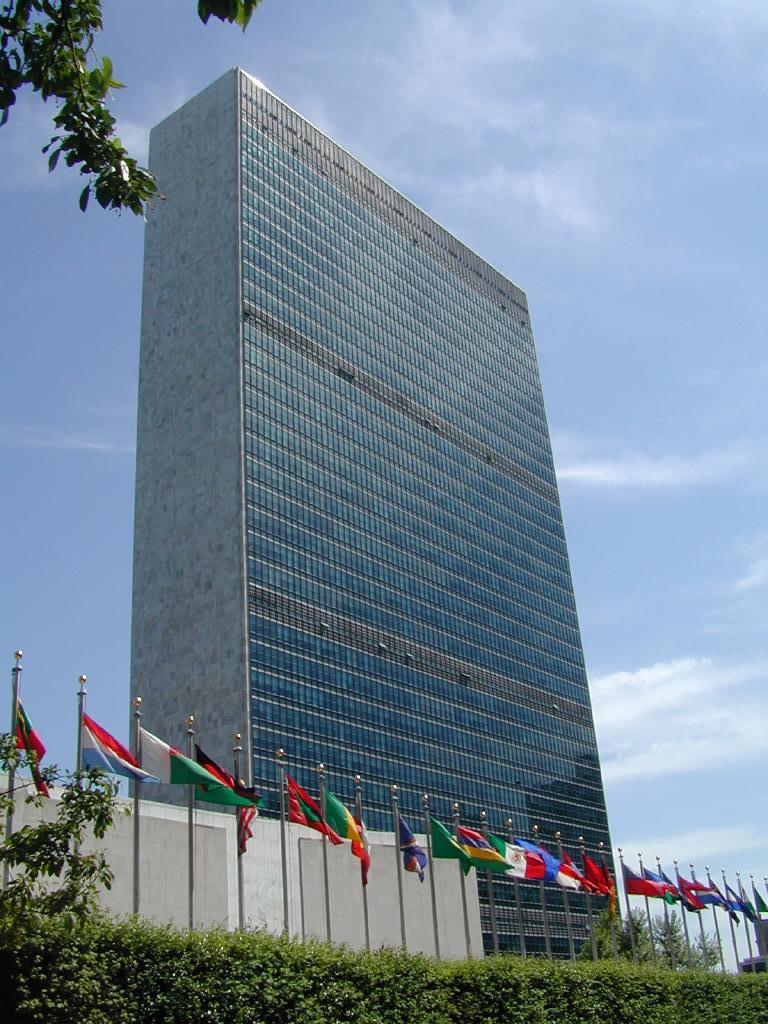 |
The UN Building in New York |
The agenda of the annual sessions varies each year and is determined at the end of each session. The structure, however, remains the same. The meetings begin with an opening ceremony and the following days are dedicated to covering statements submitted by non-governmental organizations, permanent experts of the Forum (there are 15 of them covering various geographical areas of interest) and affiliate UN organizations and offices. At the end of the session, reports are made based on the issues raised by indigenous peoples worldwide and official statements are posted online through a contracted NGO, DOCIP. To view the statements presented on behalf of the Assyrians in their homeland click here.
Our primary focus as first time participants was to familiarize the Forum, the Permanent Experts and fellow indigenous peoples about Assyrians and their plight in their respective homeland (Southeast Turkey, Northern Iraq, North-Western Iran and North-Eastern Syria). The key focus of our official statement was Kurdish oppression and terror toward the indigenous inhabitants (the Assyrians) residing within the boundaries of this geographical location. This has become more ubiquitous as the efforts for the creation of Kurdish homeland through secessionist Kurdish movements, illustrating a pattern of sustained efforts at homogenizing the region by colonizing and obliterating its indigenous inhabitants.
It is commonly assumed that the United Nations has the capacity to officially designate and recognize the indigeneity of a people or community. This is based an erroneous postulation that the UN has the aptitude and influence to formally attribute such status. The United Nations, in conjunction with various offices such as the Office of the High Commissioner for Human Rights, can provide the forum whereby minority and indigenous groups have the ability to present their individual cases and build their profile through a consistent and active participation. Thus, indigenous status is an informally recognized right of a people that promote and advocate their plight through the institutional structures of the United Nations system and offices.
A key factor is the dialogue that is created between the indigenous peoples organizations, their country-representative and various NGOs worldwide that advocate indigenous rights. The recommendations of the permanent experts of such forums and the UN as an advisory body have a tremendous impact and weigh heavily on the countries involved which often force countries to seek proactive solutions for their indigenous inhabitants.
Recognition is through consistent participation. Raising awareness of the plight of Assyrians in their homeland as an indigenous and ethno-religious minority will reinforce their indigeneity and will demonstrate to the respective governments of each country that violence against Assyrians will not go unreported. We hope with regular participation, Assyrians will become an integral part of both the UN system and the international arena as a whole.
* For further information on the United Nations Permanent Forum on Indigenous Issues, please visit the official web site at: http://www.un.org/esa/socdev/unpfii/en/about_us.html
UK Assyrians Honour British MP, Stephen Pound
Andrew Michael of Firodil Institute, reporting from United Kingdom
For some time now, the Rt. Hon. Stephen Pound MP has been a friend of the UK Assyrians community.
He has worked tirelessly and diligently for the Assyrian cause and time and time again, has stood shoulder-to-shoulder with Assyrians and fought for our cause.
 |
Rt. Hon. Stephen Pound |
It is no surprise then that the Assyrian community held a dinner in his honour, as well as paying tribute to the hard work of Councilor Michael Elliot, who was also in attendance. The night’s proceedings were organised by the Firodil Institute and ASUK. The Firodil Institute has been working towards the recognition of ‘Seyfo’, the Assyrian genocide of 1915. In our attempts to achieve this aim, our paths have crossed with Mr. Pound, who has shown great willingness to help out and support our demand for an apology from Turkey. Only last month, he held an adjournment debate at the House of Commons, where he outlined and lobbied the government to accept that the appalling events of 1915 were in fact genocide.
Although the response from the government was less than pleasing, he made his intentions clear, he wouldn’t stop working and fighting until the government acknowledge the genocide of 1915.
The night began with a speech from Nineb Lamassu, who addressed the community and the presence of the night’s special guests. He went on to raise the need for a lobbying group to be created that would raise the pertinent issues for the Assyrians to the British government. In addition, he also made the MP and the Councilor aware of Firodil’s plan to erect a monument for the genocide of 1915, and that Ealing Council also officially recognize the genocide.
We were now privileged to have Mr. Pound stand up on stage and address the Assyrian community. He began in his amazement at the age of Ninos Warda, an Assyrian from London, who has written the book titled ‘Seyfo; The Assyrian Genocide in International Law’. He had assumed that the writer of this book must have been over 50 years of age, but said it was a joy to realise that someone this young should be able to write a book that is respected and quoted from all around the world.
If there was any uncertainty as to his passion and loyalty to the Assyrians, he left the audience in no doubt as to where he stood. He said it was “not your honour to have me here today, but it is mine, that I should stand here in front of you, the Assyrians. For you have given this world so much, with all your inventions and the cradle of civilisation.” Furthermore, he asked for forgiveness for the way that the Assyrians have been treated by the British government over the last century, and made a point of the special relationship they had with the Assyrian Levies during the world wars. It was a passionate and brotherly speech, which heartened those present. This man was on our side, there was a beacon of light shining for our rights in the British government. He rightly pointed out that the Assyrians were a forgotten nation, that they were a quiet people, their rights ignored and their voices not heard. But not anymore, he was going to change this, he was going to speak on our behalf and make sure that this minority had some weight behind it.
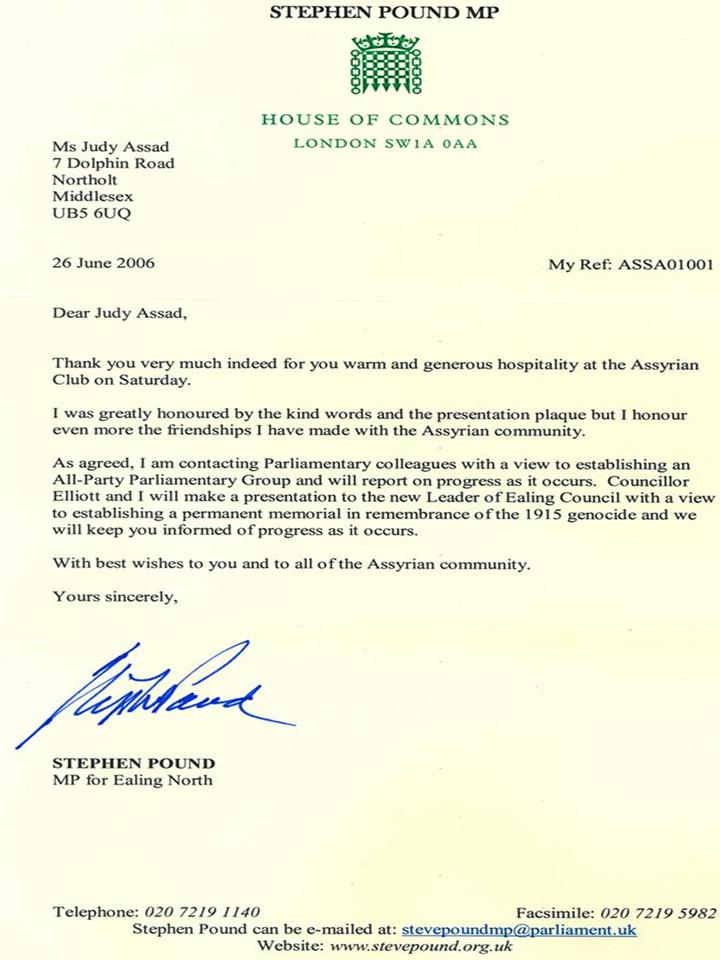 |
Mr. Pound then agreed that a lobby group should be set up in the UK, and offered his help in doing so. He also supported the need to erect a monument for the Assyrians to visit each year and pay their respects to those that died in 1915. He would work along side Councilor Michael Elliot in order to achieve this.
Mr. Elliot also spoke shortly about his relationship with the Assyrians, and he too would fight for our rights, and would petition to Ealing Council to officially recognize the genocide and to have a monument erected somewhere in Ealing.
At this point, we were honoured again to have in our presence Prof. Ashur Yousouf’s great grandson, Mr. Tigran Hovsepyan. Mr. Hovsepyan talked a little about his great grandfather, and the struggles he lived through. It was also an opportunity to publicise the books written by Prof. Ashur Yousouf and the attempts by the Firodil Institute to publish these and make them available to the Assyrian community.
At this point the guests of honour were presented with plaques from the community for their support of this nation, a small gesture of thanks for the work that they have both done, and will continue to do.
As the night progressed the Assyrian Human Rights Project ‘Marem Reshakh’ now presented us with a play, beautifully written and directed by Mrs. Shoshan Lamassu. This play highlighted the pain and suffering our people have experienced during those atrocious times. It particularly emphasized the relationship of a mother and its child, and how much suffering must have been bestowed upon us in 1915.
It was moving and thought provoking, and hit home the reality faced by our brothers and sisters under the Ottoman Empire. Much credit and appreciation must go to ‘Marem Reshakh’ for the hard work and dedication for putting this play together, and for the actors involved.
Our guests were now invited to sample a selection of our delicious Assyrian food, which had been prepared by members of the community.
And so the night ended and the community was left with a positive frame of mind. It had seen and heard from a man who genuinely wanted to help the Assyrians, and felt proud to be called a friend of our nation. It was a pleasure to see a member of the British government greet and hug many members of the community, to pound his chest at the brotherly relations, and to show a willingness to do even more for our nation. It is due to people like him and the unshakable resolve of our people, that one day we will have recognition of the genocide of 1915, and that Turkey will be asked to apologise. Let us hope that one day the Assyrian plight will be over.
We encourage the Assyrian community worldwide to write and thank Mr. Stephen Pound at PoundS@parliament.uk .
"Speaking with One Voice":
1915 Genocide Commemoration in Germany
By Abdulmesih BarAbraham reporting from Germany
(ZNDA: Munich) Under the motto “Speaking with One Voice” the Assyrian Democratic Organisation, the Association of Pontos-Greeks in Munich and the Armenian Council in Germany invited to a commemoration of the anniversary of the genocide of Christians in Turkey. The event took place on 20 May 2006 in Munich.
 |
Meeting organizers and their special guest standing in between, from left to right: Ms. Anastasia Dick, Ms. Erika Steinbach and Ms. Janet Abraham. |
An ecumenical divine service, jointly conducted by priests of three native eastern Orthodox Churches along with the Greek Orthodox Bishop of Munich, commemorating the victims of the genocide served as the opening. Representatives of the two German Churches held speeches and underlined the importance of remembrance of the past to prevent similar incidents in the future. The representative of the Evangelical Church stressed also the political aspect of the commemoration that should be considered as an appeal towards both Turkey and Germany; while Turkey must recognize the historical fact of the genocide, Germany needs to acknowledge and discuss its historical role. The Catholic Church representative pointed to the fact, that the genocide of 1915 ended a two thousands year existence of Christianity in Asia Minor. Even though nobody can undo the events, they must not be forgotten and it should be never again allowed that people are killed because of their religious affiliation or race.
The symposium part was opened by Tuma Abraham, MD, who underlined the importance of the event as the 90th anniversary for the Greek from Pontos, Asia Minor and Thrakia while for the Assyrians and Armenians it stands for the 91st anniversary. He briefly outlined some related initiatives from last year. Mr. Abraham elaborated on the submission of the Christian Democratic Parties to the German Parliament regarding the treatment of the genocide question (being main topic of the panel discussion of last year’s commemoration event in Munich) which was accepted unanimously by all fractions, though avoiding the term genocide. With regards to the negotiations about a possible accession of Turkey into the EU, Mr. Abraham stressed the importance of the proceedings for both the negotiating parties and the afflicted Christian victims of the genocide. He pointed to the slow process in Turkey characterizing the efforts to implement reforms and the Turkish influence to impact political decisions in Europe through economical pressure.
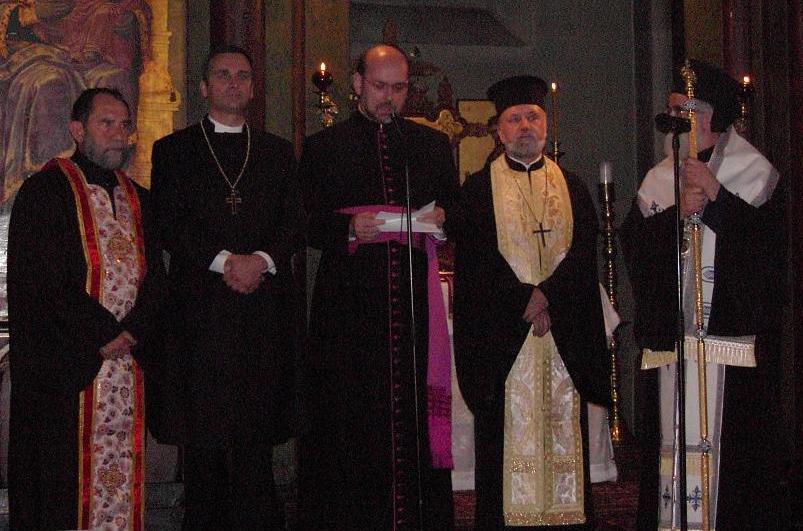 |
| A Divine Representation, Left to right: Syrian Orthodox Rev. Bitris Ögünc, an Armenian priest, A Catholic church representative, a Greek priest, and a Greek bishop. |
The Assyrian organizer of the symposium and vice-chairlady of the Society for Threatened People, Ms. Janet Abraham, read a message from Dr. Hans Zehetmair, former Bavarian Minister of State, sending respects and emphasizing the necessity of a confession by Turkey as a sign for granting equal rights to the remaining minorities in the country.
In her brief message, the Greek consul in Munich, Ms. Anna Korka, gave an overview about the historical events concerning the Greek community in the Ottoman Empire during the World War I. She closed with a call for solidarity among the European nations.
Ms. Erika Steinbach, Member of the German Parliament and President of the Federation of the Dispelled People, held the first lecture of the evening. She described the basic idea of the Centre for Dispelled People which is dialog between afflicted nations and warned of a “hierarchy among different genocides”. She underlined her commitment to work for reconciliation between the victims and Turkey, while she expects that Turkey confess the fact of the genocide.
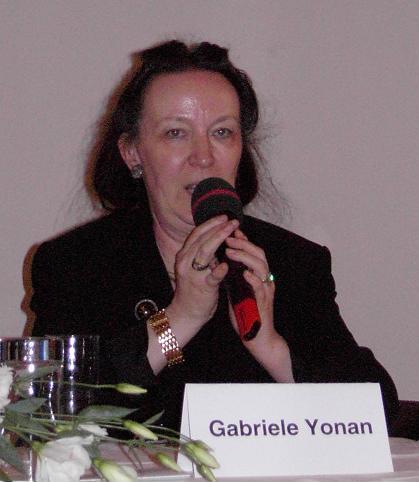 |
Dr. Gabriele Yonan, philologist and author of "The Forgotten Holocaust" |
Ms. Gabriele Yonan, philologist and author, elaborated on the term the three nations use to refer to the genocide (e.g. Seyfo as an adaptation from “Seyf ul Islam” – Sword of Islam) and touched principal source materials for the genocide and historical research – The documentary of Dr. Johannes Lepsius, the Blue Book by Bryce/Toynbee, and Ambassador Henry Morgenthau’s collections. She pointed out to the fact that all three nations, Assyrians, Armenians and Greeks are mentioned in the documents as being victims of the genocide. With reference to the current political discussions about the Armenian genocide she said, that history of Asia Minor does not need to be rewritten but has to be regarded in its completeness.
The following discussion panel led by Dr. Klaus Below, special correspondent of the Bavarian Radio, featured members of the European parliament and the State government, Dr. Markus Ferber and Mr. Joachim Unterländer, both emphasizing the necessity to pressure Turkey to ensure human and political rights for the ethnic minorities. As representatives of the Turkish community, Mr. Ali Ertem, chairman of the Association of Genocide Opponents, and the journalist Ms. Yeldag Özcan underlined their solidarity with the victims of the genocide. Ms. Özcan said that she is ashamed “that the genocide is [even] denied by Turks in Germany”. Armenian author Dr. Raffi Kantian and Ms. Gabriele Yonan emphasized the ethnical aspects of the genocide being launched by the Young Turks who’s objective was to get rid of the non-Turkish elements of the population. Dr. Klaus Below criticized the resolution passed last year in the German parliament for not using the term ‘genocide’.
The evening closed with some final words by Ms. Anastasia Dick, co-organizer of the symposium and chairlady of the Association of Pontos-Greek in Munich.
Meeting of the AACF & Fr. Yusuf Sag in France
By Antoni Yalap, reporting from France
"Be Dogs Among the Wolves!"
On the occasion of the 150th anniversary of the Work of East (Oeuvre d’Orient), which for more than 150 years has helped the Middle Eastern Christians, several patriarchs of these same Churches who live difficult days in their countries, were received in France. The Patriarchs, bishops and their priests were received by the highest political personalities: the President of the French Republic, the President of the National Assembly, and the French Foreign Secretary.
From Turkey, only a few priests were present, two of whom are well known by the Assyro-Chaldean community of France. It was very difficult to meet Father François Yakan, the Chaldean priest of Istanbul, who quickly returned to his country, where he notably takes charge of the Assyro-Chaldean refugees from Iraq. Indeed, more than 6000 refugees from Iraq await to obtain papers and to leave as quickly as possible. The Catholic Syriac patriarch asked France, in the person of Jacques Chirac, to welcome these poor Christians or to grant them temporary visas.
 |
The other priest from Istanbul was Father Yusuf Sag, the patriarchal vicar of the Catholic Syriac Church of Turkey. Native of Idil, a village in Tur Abdin, he settled down in Istanbul, following in the path of the exile of the children of his people. It is in Paris at the Foreign Missions that he received, under a radiant sun the representatives of the Assyro-Chaldeans Association of France: Naman and Joseph Adlun - whose father was replaced by Father Yusuf Sag when he had to leave the region; Zayya Yabas, Stéphane Yakan and Antoine Yalap. He asked the delegation to greet two patriarchs: Mar Abdel Ahad, patriarch of the Catholic Syriac Church, and Mgr. Sabbah, Latin Patriarch of Jerusalem.
Father Sag talked for a very long time about his history and the fate of his people. The Poor lambs among wolves. Without subtlety and in all honesty, he even described how he had quit smoking. He spoke about his new responsibilities and about his new fame in Turkey as the president of the Committee for Dialogue between Christians and Moslems.
After a small break, he looked at the president of the AACF and began to speak about his people: "We are finished in Turkey. The Turks tell us that we are all Missionaries. This is so absurd that I asked them: Where are all these new Christians so actively proselytizing"? Then he chained onto the Assyro-Chaldean values, the identity, the conservation of our culture for the past several millennia: "We used to be called Chemoun, Lahdo, Giwargis. Today in Turkey our children are called Fuat, Özkan or Tarkan. Why"?
Mr. Naman Adlun told Father Sag that the AACF exists to fight this type of challenges. "Do not lose your values, protect them, do not lose your language, it is your unique chance of survival there", answered straightaway Father Yusuf Sag, before illustrating his comments by a small anecdote: "A modest family possessed a hen, one tackle, a cow and a horse. One day, the hen disappeared. The mother burst into sobs and asked her two children to fetch the hen which gave them eggs. The children did not pay attention to her tears, saying that it was only a hen. Some days passed. The mother asked her children again to fetch the cow which gave them some milk. Contrary to all expectations, the father asked them to fetch the hen instead. His sons laughed at him by saying: “He asks us to fetch a hen while the cow has much more value'. They did not find the cow".
The mother burst into sobs and ran everywhere in search of the cow. Her children were amazed to hear their father telling them to fetch the hen. Believing that he had became crazy, they beat him and locked him in the cellar. They searched to no avail. Finally the horse was stolen also. The mother lost consciousness and the children left, again, in search of the horse. The father shouted from the cellar: “My children fetch the hen. He who stole the stole the hen is the one responsible for all other thefts".
And so Father Yusuf Sag explained that if we in the West lose our language, we would lose our identity. He said: "On our ancestral lands, to be a lamb among wolves presented no concern. Because as lambs we can only bear losses. It is necessary then, sooner or later, to become dogs among the wolves. To show that we are not weak, that we know how to defend ourselves ".
The meeting with Father Yusuf Sag, who lasted approximately one hour, ended with a photo opportunity. The president of the AACF handed the book "Göçten Önce" (Before the Exile) written by Father Aziz Yalap to the representative of the Catholic Syriacs of Turkey. The delegation left this visit with these words: "Do all that it is necessary to protect your identity!”
Assyrians of Las Vegas Raising Funds to Build First Church
Courtesy of the Las Vegas News
By Ashtar Analeed Marcus
8 June 2006
Persecuted for their faith in their homelands, Assyrians — Christians from Iran and Iraq — held a fundraising picnic at Mountain Crest Park in Northwest Las Vegas with the hopes of establishing their first church in Nevada.
“We need at least half a million dollars to buy a church,” said Manuel Babaian, deacon of the Assyrian Church of the East. “We feel all good about it, and we’re doing our best to make it happen.”
The group exists only as a congregation, with no church building, renting facilities and other churches to hold their monthly service. And for the last five years, since the inception of the Nevada church body, the Assyrians have hosted fundraising efforts at least twice a year, the deacon said.
About 80 picnickers attended the May 21 event, eating seasoned kabob sandwiches while traditional Assyrian dance music played.
“Assyrians are very patriotic Americans,” said Marlin Ghassomians, a resident of The Willows. “They value education and they work very hard. They love music and dance, and their food is the best food in the world.”
The event was organized by Deacon Philip Marcus — one of the Nevada church’s original founders — and included volunteers who barbecued, sold food-and-drink tickets, set up their nation’s flag, and dressed in traditional golden-fringed gowns.
“This is our way: Whoever has faith goes to church, prays, and helps people,” said Dinkha Polus Adam, 71. He said he is planning on moving to property he owns in Summmerlin in Las Vegas. “All we want for the time being is to have a church like other people. Then maybe our community will grow more and more.”
Teenagers, parents, infants and senior citizens gathered for games of backgammon and drank hot tea from a “samovar,” or metal urn for boiling water.
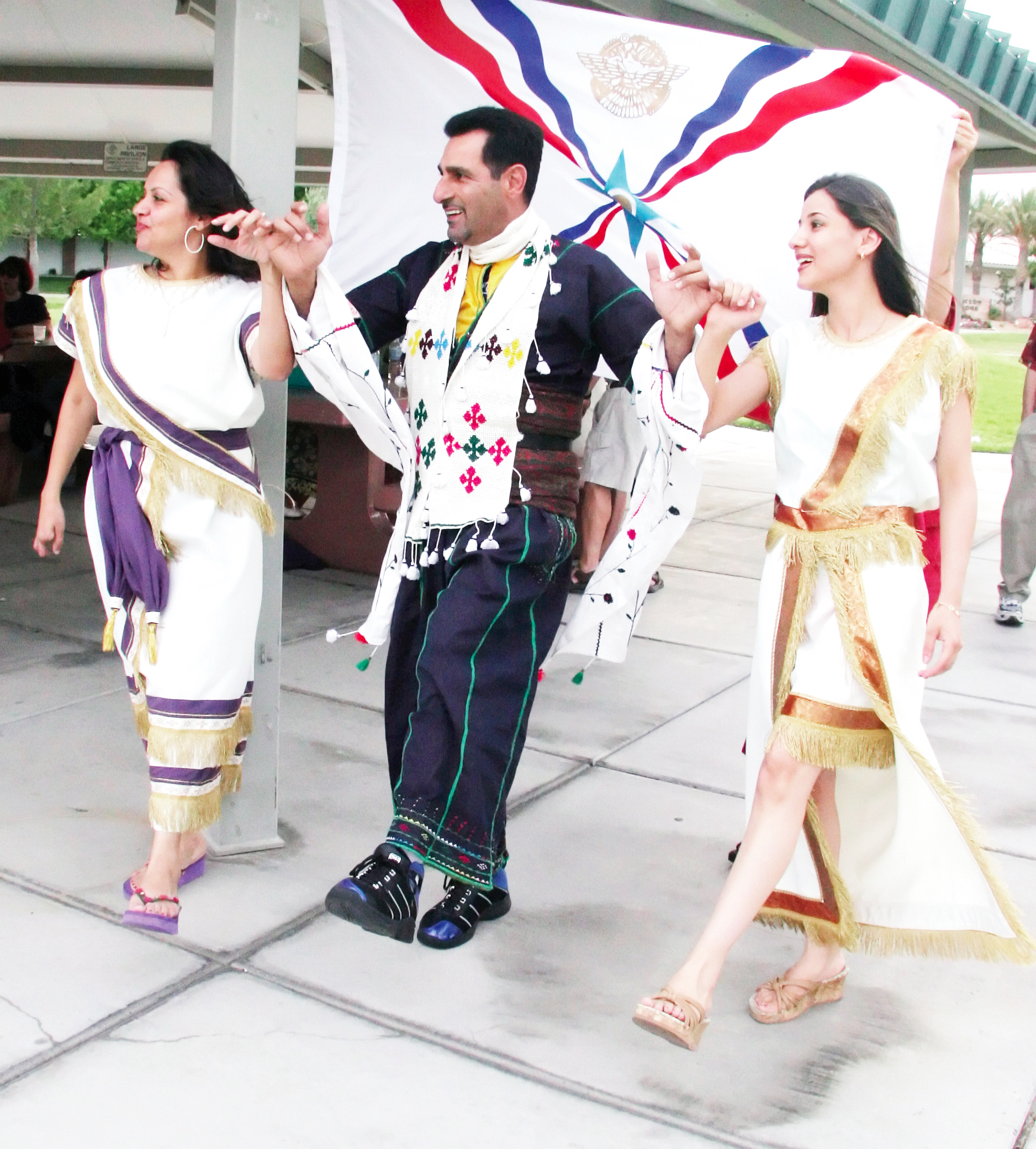 |
Suad Dawood, Johny Kako and Shimeran Anwya perform an Assyrian dance in traditional costumes. |
“We want to get together, to be with our people and touch base with our culture,” said Ghassomians, who attended with her husband, Nick. “We want a place for our young people to get together, to have a place to meet, to grow, to learn their culture and religion, which is a very important part of our culture.”
“We have lots of programs for children, college students, to provide scholarships for them,” said Nick Ghassomians, 67. “And it’s a good, healthy way of socializing.”
The 2,000-year-old denomination dates back to the time of Christ, with its ancient capital of Nineveh located in modern day Iraq. The peak of the Assyrian Empire was in 650 B.C. and reached from Egypt to Turkey. Descendants of the ancient empire, modern-day Assyrians now live in predominantly Muslim Iraq and Iran.
Recognizing the growth of the Las Vegas church community, the Patriarchate appointed a priest to conduct monthly services in the Summerlin Library beginning in June.
The Assyrian population in the Summerlin area has reached about 100 members in the last five years and is part of a nationwide population of between 83,000, the official Census Bureau figure, and 400,000, the estimate of the Assyrian International News Agency.
DAVID YOUKHANA
|
|
ARIZONA
Real Estate-Relocation-Investment |
|
Broker / Owner
Certified Commercial Sales Specialist
Babylon Realty
Glendale, Arizona 85310
Click Photo For More Information |
602-410-9555
|
|
“I was the first Assyrian to come here,” said David Warda, of Sun City Summerlin. He said he moved to Las Vegas more than 20 years ago to work for the Tropicana as a public relations representative.
“I’m almost 7,000 years old,” 87-year-old Warda said, referring to his ancient ethnic heritage and its calendar year of 6756.
Reflective of the Southern Nevada growth rate, the community continues to draw more members to the area from around the country.
“I moved here March 16,” said Suzy Soleimani, originally from Iran. “I feel at home because of all my friends and cousins, and my native language.”
She moved from Columbus, Ohio, to The Trails in Summerlin.
Soleimani attended the picnic with her husband, Parviz, whom she met in Iran, where they were neighbors.
“It’s important to support the Assyrian church because we are all Assyrians,” Parviz said. He came to support the fundraiser despite belonging to the Presbyterian Church. “That’s our primary goal, to be together, support each other. That’s our nationality.”
The church’s liturgy is held in Aramaic, which historians believe Jesus spoke. Its congregation speaks Assyrian, or modern Aramaic. Among the first to accept Christianity, the Assyrians have a legend that its church began when St. Thomas the Apostle evangelized to them in the first century.
“The belief of it is more Protestant than Orthodox,” said church member Madline Ellyin, 59. “Actually, they say if Martin Luther knew about the Eastern Assyrian Church, he would’ve just taken that church and elaborated on it, because it’s exactly [the thesis] he put on the door of his church.”
AAS in Central Valley California Honors URMI Creators
By Tony Khoshaba, reporting from California
(ZNDA: Modesto) On 24 June the volunteers and friends of Assyrian Aid Society Central Valley Chapter gathered in Modesto, California to honor the contribution of Ms. Helen Saint Vincent and Raabi Hannibal Alkhas to our culture and art by their recent production of the Urmi CD.
The president of AAS chapter thanked the two artists for their generous donation of the proceeds of the CD to AAS. At the same time Mr. Tony Khoshaba announced that the new team of AAS in Central Valley is committed to serving the Assyrian community in Central Valley by providing quality educational and cultural programs.
Ms. Helen Vincent also thanked AAS for their support to publicize and sell the CD in various Assyrian communities in the US. Then she briefly described her motivation to produce this CD and her plans for future projects.
She entertained the audience by several beautiful songs. One of the songs based on a poem by late Raabi Addai Alkhas brought tears to the eyes of many participants.
The evening also included poem recitals by several individuals.
At the end the audience expressed great interest in Ms. Helen’s songs and asked her to come back again to US with a concert. AAS chapter president announced that AAS committee is already working with Ms. Helen for possible future concert tours in the US.
U R M I E CD |
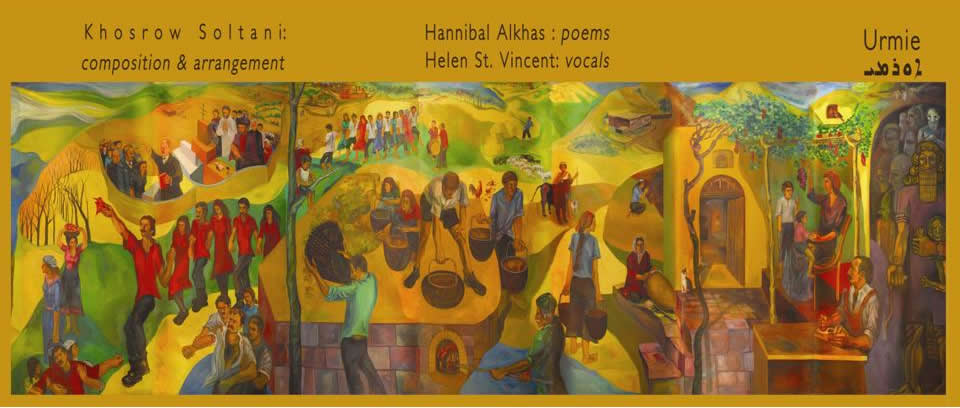 |
T h e H a l l u c i n a t i o n s o f a n A r t i s t |
Assyrian Civilization on Display at Shanghai Museum
Courtesy of Shanghai Daily
By Wang Jie
30 June 2006
(ZNDA: Shanghai) Travel back in time with the Shanghai Museum's "Art and Empire" exhibition of artifacts from the ancient and historically important Assyrian Civilization, writes Wang Jie.
The Assyrian Civilization is one of the most famous ancient civilizations. It existed in what is modern day Iraq 3,000 years ago.
"Art and Empire," an exhibition featuring treasures from the ancient civilization provides Shanghainese with an opportunity to learn more about Assyria.
On loan from the British Museum, some of the 251 relics showcased in the Shanghai Museum have never traveled outside of the British Museum except when they were displayed in the Metropolitan Museum of Art in New York a decade ago.
"It is a rare chance to appreciate them in Shanghai, many representative works have been selected to present a comprehensive picture of this important ancient civilization," says Chen Xiejun, curator at Shanghai Museum.
The objects on view include major stone reliefs and sculptures, daily ornaments and vessels, cuneiform records in clay and historical materials about the discovery of Assyria.
Surrounded by a series of bygone images like the gallant king engaged a war or a lion shot by an arrow, visitors seem to be led into a time tunnel where a past historical chapter is revealed.
Iraq, the cradle of ancient civilization, has always been a place contested by many military campaigns. The fertile land between the two renowned rivers, the Tigris and the Euphrates, has experienced continual epic struggles for thousands of years.
Assyria was originally a small state in northern Mesopotamia, and it later had developed into an immense empire by the 8th century BC. Its borders reached the Mediterranean in the west and Iran in the east. Influenced by Sumerian and Babylonian culture, it rapidly spread the ancient civilization of Mesopotamia to its surrounding territory through its military power.
Assyrian Civilization reached its climax before the 7th century BC. It had established a huge empire, the Assyrian Empire, but it was later destroyed by the Babylon men in 612 BC.
"The highlight of the show are the 30 stone reliefs," says Li Feng, a spokesman at the museum.
The biggest stone relief weighs 4.3 tons. According to Li, the artistic achievement of the Assyrian Empire was well reflected through these sculptures and reliefs featuring realistic scenes of royal expeditions, hunting and other activities.
However, the Assyrians were sometimes perceived as cruel and tyrannical, partly due to the disparaging references to them in the Bible and partly due to their harsh treatment of prisoners as shown on those stone reliefs.
"It is clear now that they merely followed the normal standards of the day," Li explains.
The contents of the cuneiform texts, the sophisticated art and the quality of craftsmanship all manifest a highly developed civilization. In particular, the stone wall reliefs with their intricately carved narrative scenes were directly copied in the later reliefs of Persia and Greece.
In 1999, the Shanghai Museum held an Egyptian relics show also on loan from the British Museum. The exhibition attracted nearly 630,000 visitors during two months.
"We are looking forward to the same fever from the public this summer," Li says with a smile.
July 1-October 7, 9am-5pm
Address: 201 People's Ave, Shanghai, China
Admission: 20 yuan
Tel: 6372-3500
Susan Nisan Creates Latin Program in Turlock
Courtesy of the Modesto Bee
By Merrill Balassone
16 May 2006
(ZNDA: Turlock) Susan Nisan's daughter Sabrina graduated from high school at age 16. Nisan's 15-year-old son Ashur, still in high school, has a semester's worth of college credits under his belt.
Nisan said her children learned self-reliance and are prepared for college thanks to a mix of homeschooling and classes at the KTL Charter School in Keyes. The charter school serves families who home-school their children, with most students attending classes at KTL one or two times a week.
Nisan, now a Latin teacher at KTL, took Latin every semester as a student at Coe College in Iowa. After earning a master's degree in developmental psychology from Cornell University and her teaching credential from California State University, Stanislaus, in 1999, Nisan spent five years helping to create KTL's "core knowledge program."
 |
Susan Nisan of Turlock teaches Latin for 2nd through 12th-grade students and program coordinator for KTL Charter School in Keyes (near Turlock). Her family: husband Bellos Nisan, daughter Sabrina, 19, and sons, Ashur, 15, Evin, 14, and Michael, 12. |
The program's goal is to expose children to ancient history, classical music and great artists at a young age.
"I've seen my own children do things I would've loved to have done when I was growing up," Nisan said.
Since creating the Latin program two years ago, Nisan now teaches 70 elementary, middle and high school students. This year, many of her students earned awards for high marks on the National Latin Exam. About 130,000 junior high and high school students around the world take the test each year.
Principal Lee Ann Stangl, who nominated Nisan for "Class Acts," said Nisan single-handedly created a thriving Latin program at the school.
"She's a workaholic, she's really creative and she's done it all on her own," Stangl said.
Nisan shared her thoughts on these topics:
Summer plans: "I'm going to the American Classical League Convention in Philadelphia to meet with Latin and Greek teachers from throughout the nation and the world. If we were in class five days a week, I wouldn't have the time to spend creating the curriculum and the materials for the kids."
Most challenging part of teaching: "It is many, many hours of work. The motto of the National Latin Exam is labor omnia vincet, 'work conquers all.' I feel that I'm doing this for my children as well as the children of our school."
Favorite tool in the classroom: "We love playing games. A student will call out a word in English and we'll have two students at the whiteboard with fly swatters. The first to swat the corresponding word in Latin wins. The kids will also act out stories from the ancient world."
Advice for parents interested in homeschooling: "You don't have to have a teaching background; lots of people are willing to share their expertise with you. You just have to be willing to put in the time."
|
|
Surfs Up!
Your Letters to the Editor
|
Happy Memorial Day from Baghdad
John B. Stinson
Embassy of the United States
Baghdad, Iraq
The 31st of May is the day that the United States traditionally celebrates as a memorial to her war dead. During times of peace, it’s usually a day to watch the Indianapolis 500 motorcar race and eat barbecued hamburgers and hotdogs with friends and family. It also starts the summer season for us.
During wartime, this Day becomes much more poignant as new names are added to monuments in our city halls and town greens.
It’s very easy to remember our losses and often very difficult to put those sacrifices in context.
I thought I’d like to try to add some perspective – in 1915, while the 1st World War was being fought in Europe and in Russia, the Ottoman Turks began what may be some of the most “successful” holocausts in history – over 2 million ethnic Armenians, ¾ million ethnic Assyrians and tens of thousands of ethnic minorities died because they were Christians. No one was there to protect them and few are around now to remember them.
Today, as we hear the constant stories of inter-Islamic violence, we should remember that there are other communities who continue to look to us to help bring about a just and civil society where murder and intimidation, political marginalization and economic/social deprivation have no place.
I’d like to draw your attention to two of the dates listed above – September 22, 2005 and May 6, 2006. In the first instance, I was with Pascale when she met with the survivors of the attack on her bodyguards. She was supposed to go to a conference in the U.S. sponsored by the State Department on Human Rights. Pascale stayed here in Iraq to be with the families while they buried their dead. In the 2nd instance, I’ve met with Younadam a number of times. This is at least the 3rd assassination attempt on his life – he’s the only Christian member of the new Council of Representatives.
For those of you who have been here and given of your time and talent – thank you. For those of you who just see what we’re doing through the TV or print media, this is important and these sacrifices are not in vain. We are helping real people with real hopes and dreams trying to make good lives for their children as we do for our own.
As of 1 July 2006, 2537 U.S. military fatalities in the war in Iraq have been confirmed by the U.S. Department of Defense.
Christ is the Center
Verjean Oshana
Illinois
I thank the Lord for Janet Kenna for her article "True Christianity", June 18, 06.
I hope more people will step forward to declare Christ as the center and the only
ONE to follow. I pray that more people would be touched by the Holy Spirit and take a bold stand for Christ.
Taking a Stand When Necessary
Fred Aprim
California
A nation that dos not take the necessary stands and draw lines when needed is a nation that is destined naturally to follow the path of oblivion.
Here is a hypothetical example to consider. If, and I stress IF, in the 2005 elections in Iraq the Assyrians, for example, voted for slate 800, i.e., Assyrian only, (and not slate 740 and ZOWAA) to lead us. What would the Assyrians and their political groups have done if the KDP and Barazani brought Mr. X from somewhere else and made him as our representative in the Kurdish Regional Government and brought Mr. Y from another place and forced his as our representative in the Central Government in Baghdad, ignoring in the process that we voted for slate 800 democratically as our representative slate, again hypothetically.
The issue is drawing necessary lines and taking stands when needed. There are times when we MUST act as a nation and look beyond party, tribe, village, and church affiliation. When our political groups and the general population do not take the right stand when it is really needed, we are giving our enemies a signal that it is okay if they meddle in our internal affairs and decide for us. So we must not be surprised if tomorrow the KDP did more than it is doing today since our political groups did not take any steps to tell Barazani NO, we do not approve that you meddle in our internal affairs when you appointed yourself as a guardian on us and decided who represents us.
We MUST look at this particular issue in a fair manner and leave emotions aside. It is a matter of principle. Sadly, it seems to me that neither our organizations nor we as the general public care about principles and taking stands.
I pity us for saying yes to Barazani and the KDP and delivering Assyria to the Kurds with our silence.
They do not Hold a "Key" to Our Future
Waleeta Canon
Washington DC
There have been many letters and opinions floating around by some Assyrians regarding creating a working relationship with the Assyrian members of the "Kurdistan Parliament". It is understandable that in difficult situations, like the Assyrians find themselves in today, we approach solutions with caution - a conservative approach is oftentimes the best strategy when one has little to bargain with, and it becomes almost instinct to want to forge alliances with those with more money and influence to ensure some sort of survival.
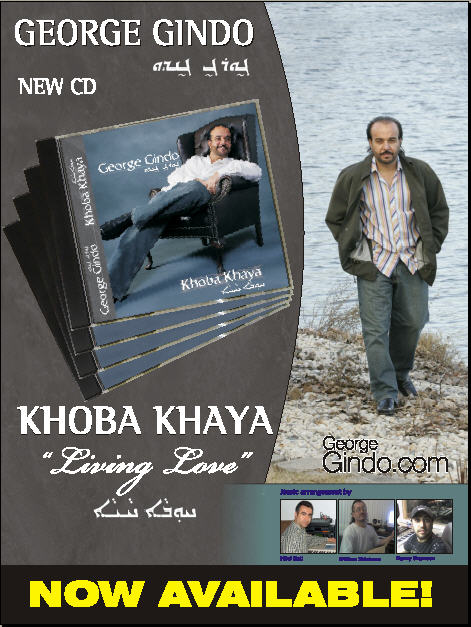 |
To Download & View "Khoba Khaya" Trailer Click Here (10 MB) |
However, even in the most dire of circumstances, lines must be drawn, or we risk losing our identity in order to "play nice". There are acceptable terms, and unacceptable terms, for negotiation. Opening a line of dialogue with those who are, in every sense of the word, an enemy of Assyrians, is one thing - accepting their definition of who we are, who represents us, what we may and may not do is another thing completely. We should not "take whatever we can get" - that is the action of someone who believes he has already lost and has no hope. This mentality leads only to eventual abuse and exploitation by those who are our supposed "allies". When we are not negotiating, or even dialoguing, on our terms - we have already lost.
This is not to say that the Assyrians appointed in the "KRG" do not deserve our attention - there should certainly be avenues for communication. But the fact is, they are not our elected representatives. The Assyrian Democratic Movement has an elected representative. If the "KRG" truly has Assyrian interest in mind, it would be inclusive, rather than exclusive and arbitrary, about which are the "right" Assyrians they deem fit to work with. It is difficult for Assyrians to define their relationship with the central Iraqi government or the northern Kurdish government, because Assyrians exist all over Iraq and determining in which capacity we work, and with who we work, is confusing and at some points, mutually exclusive. But accepting the terms the "KRG" has given the Assyrians - how, what, when, where and why they can do anything - is unacceptable. If Assyrians accept that the "KRG" has the right to exist and have self-determination for the Kurds (in Assyria), then why not "accept" that Assyrians have those same rights as indigenous people?
The ADM is quickly becoming a broken political party. However, "fixing" an established political party will bear more fruit in the long run than bending to the will of the "KRG" and to the Assyrians they have chosen to "represent" the Assyrian population of "Kurdistan" (Assyria). We either have a movement of our own, or we have a movement that depends on the "kindness" of Kurds and success of "Kurdistan". We can't have both. Having a political party like the ADM that we are frustrated with does not automatically require we ally ourselves with the Kurdish authorities. It is necessary that our political leaders begin working together instead of against each other, our Bishops and Patriarchs remain outside the realm of politics, and Assyrians be clear about what it is they need and want in Iraq. Kurdish officials do not factor into these actions and decisions.
Rather than asking from Kurds or Arabs to treat us as a distinct ethnic group, indigenous to Iraq and deserving of our own self determination, we should be demanding it. Our civil rights and human dignity are not theirs to "give back" to us. They are ours for the taking. It is clever politicking that the "KRG" included some Assyrians in their "parliament", but ultimately, those Assyrians receive their paychecks from the "KRG". And they know never to bite the hand that feeds them.
In a recent article in an online kurdish news outlet, a clever Kurdish propogandist wrote: "The initial independence (in Iraqi Kurdistan) will simply be the first step in a much broader movement to establish a progressive, modern Kurdistan that will reshape the way the world sees the Middle East, for it must always be remembered that when all has been said and done the Kurds have no friends but the mountains."
Indeed, neither do the Assyrians.
Your Holiness, Trust Your People And Not The Kurds!
Shmouel Warda
Australia
It is not possible and it is unacceptable but it is happening; honest faithful & true Assyrian people could never have believed what our Church leaders are doing to our nation. His Holiness Mar Dinkha the holy father of our Church has forgiven the murderers of our nation. 170,000 Assyrian men, woman and children were inhumanely massacred between 1915 – 1918 by Kurds in Turkey, Iran and Iraq and yet Mar Dinkha in his letter dated 15 June 2005 to the Kurdish leader Masoud Barzani, says “throughout the course of human and recorded history the Ancient Assyrian peoples, and the Kurds have lived together in peace and harmony”!
Well if His Holiness cannot hear the crying voices of those Assyrians who were massacred by Kurds then read this one event that took place in Urmia in an article October 9, 1915 (Article from the Times [London] it reads “DEATH OF 12,000 NESTORIAN CHRISTIANS”). One extract from that article reads: “The destruction of life, wealth, and houses was greater than we had imagined. We have lost by death and murder more that 12,000 souls; 150 Christian Nestorian villages had been completely plundered and burned to ashes by Turks and Kurds”. In the ground, large pits were dug for graves, in one grave alone they filled it with 1,500 bodies of innocent and God-fearing Assyrians."
Your Holiness, were those times peaceful and harmonious?
In May 2006 Hon. Jenny Mikakos M.P. in state of Victoria Parliament in Australia stated openly that the Turks and Kurds killed 750,000 Assyrians between 1915 – 1923. Yes their bodies are turned to dust by now but their crying voices and their souls are still alive in the hearts and minds of all true and faithful Assyrians and we have marked the 7th of August in our hearts as a Remembrance day of our Martyrs.
When, where, and at what point in history can His Holiness show us that the Kurds protected our Assyrian villages? Has His Holiness asked Mr Barzani to give back all our villages that the Kurds took by force and still to this day illegally hold on to?
In today’s world we will only accept and believe in a democratically elected leader like all civilizesd nations. And to that effect the Assyrian people for the first time in their history were given the opportunity to vote, and that they did twice, by casting their ballots in favour of the Honourable Yonadam Kanna to represent our nation in the new Iraqi Parliament. In fact 84% of all those that voted for either one of the three slates that campaigned for our votes, voted for slate 740 led by the Honourable Yonadam Kanna.
Has Your Holiness since that election stood in a Church, a dinner party, in a meeting or any where else in this world and contemplated with a fair and just mind, that because the overwhelming majority of Assyrians, your people, had elected the Honourable Yonadam Kanna, that it be your duty to publicly bless and support the wish of your people? Did you know that until now no one, including your Holiness, has ever been elected by the Assyrian people? But because of our love and respect to our forefathers and the founders of this once great church we are still keeping our faith with Church of the East. These ugly and unopened movements towards working for the Kurds will only bring dark and sad days to our people if not another massacre. We have a great leader, who stood with his people in front and amidst all killings and bombs in Iraq to represent us and has never worked for the Kurds but only for our Assyrian-Chaldean-Syriani nation. Yes, he works with Arabs, Kurds, Turkman and the rest - but never for them!
Why is your Holiness putting your trust in the hands of those Assyrians working for the Kurds like, Sargis Agkhajan and Fawzi Franso Toma Al-Hariri? Have you every thought that they put the Kurdish nation first and foremost in their life? Do you know they rather die for Kurdistan and not for the Assyrians?
Why have you kept your meeting with Barzani a secret? And what was discussed? Were there any deals done, and what were they?
Your Holiness' meeting with Barzani gives the impression that deals are being done with the KDP clearly designed to destroy the national movement of our people – the Assyrian Democratic Movement (Zowaa), our only hope of the Assyrian-Chaldean-Syriani nation. We will always stand with those who are democratically elected by the people, from the people, and for the people and we will always remember Zowaa who gave many martyrs and will undoubtedly give many more, because this is the price you pay when your cause is detrimental to the vision of a greater Kurdistan.
Your Holiness, under your leadership the Church has involved itself in the Assyrian politics; this cannot be denied nor forgotten, and as the saying goes when some one plays with fire they will get burnt. Whenever the prelates feel it is good to
get involved in politics they jump in if, but when things get hot they fall back and say we don’t get involved in politics. This is the measure our people are measuring today and sourced by the Prelates actions.
Sure, we all felt very sorry for the thousands of Kurdish men woman and children killed by most evil man in the history of Iraq - the murderer Saddam Hussein. Today Kurds are doing what is good for the Kurds only and not any one else. Had he been alive the late, martyr Francis Shabo would certainly testify to that! And you as the leader of the Assyrian Church approve of their doings?
They will try everything to destroy the roots of nationalism that thrives in our Assyrian Chaldean Syrini nation, in the so called Kurdistan that you have endorsed. What happened to our forefathers before Kurds even came to the area, should we forget them because the Kurds will help the Church financially in Kurdistan?
We will stand with conviction and with our honour and dignity with the blood of our forefathers and will never forget them no matter how much money the Kurds promise us. We will continue to tell the world of the bad treatment of our people by any one in Iraq, like we have been doing for the last 40 years.
Today we have a leader who is elected by the Assyrian Chaldean Syriani people and the only leader with a vision of uniting our nation particularly in Iraq. Why does Your Holiness not stand and support openly this great man and ask your prelates to act in support of this great and noble task.
Glory to those who stood firm and died with dignity for the cause of our nation. Death and shame for those who are working for the Kurds against our people.
We will never give up to the last soul; we will never stop our struggle for nationhood; we need a leader like Honourable Yonadam Kanna who lives with our people, stands for the people, and will die for our people in the new Iraq.
Emergency Aid to Fleeing Assyrian Families
William Aprim
Chicago
Emergency financial protection for fleeing AssyrianChaldeanSyriac people to the north of Iraq has become increasingly a dire necessity today. Hundreds of desperate, harmless innocent families have already left their homes, fearful from the waves of criminal activities inflicted as a result of lacking security, peace, law and order to protect them. This unpleasant situation will continue to deteriorate as long as the political power struggle in iraq is unsettled. We came to understand that the need to accommodate the influx of refugees has already become a problem.
 |
|
Consequently, a lot of finger pointing, bickering, and crying anger is taking place today, world-wide: satellite, radio and paltalk. A lot of suggestions and well known disagreements sometimes leading to meaningless confrontation, forgetting the importance of the real issues discussed. With all our due respect to the good intentions of the individuals concerned, in times like today, we should look forward for much more suitable, and proper ways and means to find solutions. Regardless, who we are, and who presents the logical concept.
Brothers and sisters – today, the people who became homeless, and disillusioned victims of circumstances, are all pure Assyrians, of all beautiful colors, from all sacred faiths. They have the same blood that runs through our veins, no exception! What is sacred and holy for all of us today is to rise to the level of our national responsibility, as a united people, and address the dangers of reality that is currently confronting our co-existance.
Meantime, we must be grateful for having a very respectful recognized entity called “ The Assyrian Aid Society” which is well known for its humanitarian programs. With this in mind, and in view of the urgency of this very demanding need to help and protect the fleeing families, who became homeless because of their National colors: AssyrianChaldeanSyrian (Christians), we must rise to the highest level of our National responsibility. With dignity and pride – not only to offer sympathy, but, to participate actively in contributing our fair share in financial assistance, to minimize the suffering of those who fall victims today. For now, we must act fast, we are a proud people, we are remnant of the greatest nation on earth, (ASSYRIA) we should learn to challenge the tragedy of our lifetime, with whatever limited resources that we possess.
Final thought - just imagine if you were among the fleeing victims: the old-disabled, sick, disoriented men and women, children suffering from malnutrition, all running in despair to safe their life. You would feel the pain immediately from thousands of miles away. It is a very tragic time for us all, we must do the right thing. Make a gift of life by sending a donation to the Assyrian Aid Society for proper distribution to the victims of unprecedented circumstances.
Searching For My Relatives in America
Helena Kern
Germany
My name is Helena Kern and I am searching for my relatives in America. I would Like to ask you to be so Kind as to Help me to find Lida Mamu (or Mamu) Saja. Her maiden name is Arutjunov.
She was born around 1928 and 1930. She's Assyrian from Russia, has
6 children: Albert, Givargis, Edik, Lida, Anja and Emma.
She lived until 1980 in Iran. Her husband Saja Mamu died in Iran.
Her eldest son Albert Mamu studied theology. He has lived in Australia with his wife, Schamiran, and 2 sons since
the end of the 1970's. Perhaps he is working now as a minister in a Christian church.
Her daughter Anja lived during those years in Los Angeles, California.
She has 2 children, Nancy and Edwin. She is also my Father-in-Law's sister. His name is Viktor Arutjunov.
Viktor Arutjunov lives on the Crimea in Simferopol, in Gres in Ukraine.
We would be very glad if you could find our relative. We are Looking forward to hearing from you soon.
Thank you very much for your efforts.
If you have any information that may help this Zinda reader find her relative contact us at zcrew@zindamagazine.com.
|
|
Surfer's Corner
Community Events
|
New Book: The Church of the East by Christoph Baumer
Title: The Church of the East
Subtitle: An Illustrated History of Assyrian Christianity
Author: Christoph Baumer
Preface by HH Mar Dinkha IV, Patriarch of the Apostolic Assyrian Church of the East
ISBN: 1 84511 115 X
Retail price: $45.00
Trim: 289 x 237mm
Binding: hardback
Extent: 336pp
Illustrations: 4-col., illustrated throughout
A sumptuously-illustrated history of one of the world’s most mysterious and forgotten Christian churches.
- First comprehensive and illustrated book in English about the history, culture and theology of the Church of the East
- Author gained unique access to sites of outstanding historical and cultural importance
- Richly illustrated throughout in full-colour, and includes several maps of the region
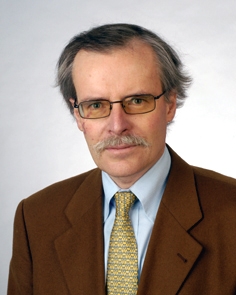 |
Christoph Baumer, author of the Church of the East, An Illustrated History of Assyrian Christianity. |
Christoph Baumer is a leading explorer of Central Asia and Tibet, who has made several important archaeological and historical discoveries on his journeys. He is the author of many books, which include 'Southern Silk Road' (2001) and 'Eastern Tibet' (2005), and he is in addition a Fellow of the Royal Geographical Society, a Fellow of the Royal Asiatic Society, a member of the Explorer's Club, New York, and President of the Society for the Exploration of EurAsia.
The so-called 'Nestorian' Church (officially known as the Apostolic Assyrian Church of the East, with its traditional See in Baghdad) is one of the most significant Christian communities to develop east of the Roman Empire. Although it has dwindled today to around only 400,000 believers, in its heyday the Church had 10 million adherents, boasted 27 archdioceses and 220 dioceses, and stretched from the Mediterranean to the Yellow Sea. Christoph Baumer, who is one of the very few Westerners to have visited many of the most important Assyrian sites, has written the only comprehensive history of the Church, which now fights for survival in its country of origin, Iraq, and is almost forgotten in the West.
An Illustrated History of Assyrian Christianity |
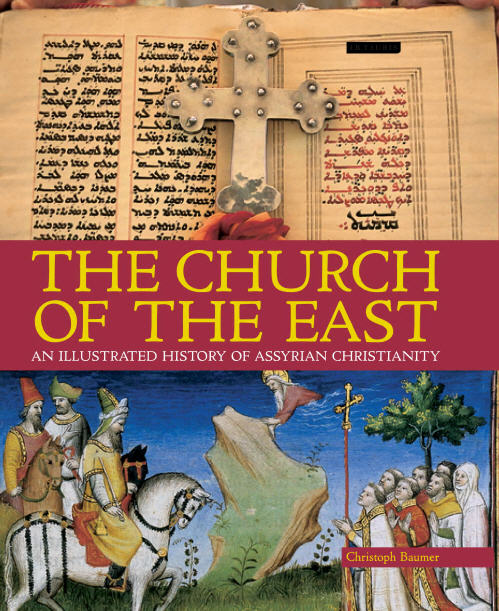 |
20% off List Price for
ZINDA READERS
For a limited period only & only for readers from U.S.
Click Bookcover to Order Your Copy
Use Promo Code P356ED
when you proceed to 'Checkout'
|
The author shows how - from the fourth century CE - the Church of the East produced some of the outstanding figures in the history of Christian spirituality, like Ephrem the Syrian, Babai the Great and John of Dalyatha, while between the sixth and the ninth centuries Nestorian physicians and scholars translated into Syriac and Arabic the Greek classics of philosophy, medicine, mathematics, geometry and astrology. These translations later reached Western Europe, which by the early Middle Ages had altogether lost sight of its ancient Greek heritage. Baumer narrates the Church's rich and colorful trajectory, from its apostolic beginnings to the present day, and discusses the Church's theology, christology and uniquely vigorous spirituality. He analyzes the Church's turbulent relationship with other Christian churches and its dialogue with neighboring world religions such as Zoroastrianism, Manichaeism, Islam, Buddhism and Taoism. Richly illustrated with maps and over 150 full-color photographs, the book will be essential reading for those interested in a fascinating but neglected Christian community which has profoundly shaped the history of civilization in both East and West. The Church is also of supreme theological significance for its Christian anthropology, which rejected the Augustinian doctrine of original sin in favour of a soteriology that stressed man's free will.
A Preface by the Church's Patriarch, H. H. Mar Dinkha IV, emphasises the authority of Dr Baumer's history, which is now lent additional topicality by the current crisis in Iraq.
Table of Contents
- Foreword by H.H. Mar Dinkha IV, Patriarch of the Church of the East
- Introduction
- The Beginnings of East Syrian Christianity
- From Diversity to Unity: Church Fathers and Heretics
- The Loss of the Christian Ecumene
- The Patriarchate of Seleucia_Ctesiphon
- Aspects of East Syrian Theology and Spirituality
- Christians Under Islamic Rule
- The Mission to the East
- The Period of the Mongols
- The Thomas Christians of South India
- The Period of Trials and Divisions
- The Rebuilding of the Assyrian Church of the East
Zinda Readers Save 20% off Retail Price of Baumer's New Book
Through a special arrangement with Palgrave Mcmillan Publishers, Zinda Magazine is now offering its readers 20 percent discount off of Christoph Baumer's splendid book which offers its readers the most comprehensive examination of the history and the development of the Assyrian Church of the East. Filled with color maps, illustrations, photographs, this fascinating book is a must-read for every Assyrian enthusiast interested in learning about the Christian identity of the first nation to convert to Christianity in the A.D. First Century.
Zinda Magazine is proud to bring its readers this unique opportunity to own this book at a substantial saving. Click here and use the Promotion Code ' P356ED ' when you are ready to check out. Note that this is only a limited time offer. Zinda Magazine congratulates Christoph Baumer on this momentous literary and historical achievement, and thanks Palgrave Mcmillan, in particular Ms. Isabella Steer and the friendly staff of Palgrave, for their generous offer to our readers.
For readers who will be attending the 73rd Assyrian National Convention in Chicago between September 1 and 4, 2006, note that Dr. Baumer will be coming from Switzerland as a guest lecturer to discuss his book and most recent explorations of ancient Nestorian monasteries and churches in Central Asia. His illustrated lecture is on Saturday, September 2. Don't miss this rare opportunity to meet the author of the book everyone is talking about.
Own Your Copy Today!
Coming Later in July: Fred Aprim's Most Anticipated Book
Title:
" Assyrians: From Bedr Khan to Saddam Hussein
Driving into Extinction the Last Aramaic Speakers "
Description
406 pages, 100 photos and photocopies of newspapers clips spanning a century of journal coverage of modern Assyrian history
Book Summary
Throughout the Christian Era, the Assyrians have faced an immense tragedy through persecution, oppression, and massacres. The Assyrian tragedy in Mesopotamia continued intermittently during the Sassanid Persians (A.D. 226 - 637), Seljuk Turks invasion of the eleventh century, Mongols invasion in 1258, Tamerlane's destruction that began in 1394, the Saffavid Persians in early sixteenth century and during the rule of the Ottoman Turks since the middle of the sixteenth century. Throughout the nineteenth and early twentieth centuries, Turks and Kurds committed numerous massacres against the Assyrian Christians in their secluded mountains of northern Mesopotamia and in Tur Abdin region in modern southeastern Turkey. As the Ottoman Empire entered WWI, it declared jihad (holy war) against its Christian subjects.
Backed by Kurds, the Turkish army invaded northwestern Persia (Iran) and committed further atrocities against the Assyrian refugees who fled the Ottoman territories and against Assyrians of Persia as well. The jihad transformed into an ethnic genocide against the Assyrians that was perpetrated by the Turkish state and Kurdish warlords. This genocide continues to this very day due to the policies of the Kurds in northern Iraq, southeastern Turkey, and northeastern Syria. The Assyrians lost two-thirds of their population and most of their homelands in northern Mesopotamia during WWI alone. Since the creation of the modern Middle Eastern states after the partition of the Ottoman Empire post WWI, the Assyrians have faced and continue to face a systematic Arabization, Turkification, and Kurdification policies by Pan-Arab governments, Pan-Turkish governments, and by Kurdish political parties. Hundreds of thousands of Assyrians have fled their homelands seeking shelter in Europe, United States, and Australia. Furthermore, the rise of fundamentalism in the Middle East is posing another serious threat to the survival of the remaining Assyrians and to other Christian communities in the Middle East.
Author Biography
Frederick A. Aprim was born Frederick Aprim Minasheh in the city of Kirkuk (the ancient Assyrian city of Arrapha), northern Iraq. He is a graduate of Mosul University with a B.Sc. in Mechanical Engineering. He left Iraq in September 1980 and became a U.S. citizen in 1986. Fred's family, like many Assyrian families, experienced its own share of oppression and persecution.
While in Iraq, both his father and teenage brother were imprisoned unfairly and tortured.
In 2003, Fred published a booklet titled "Indigenous People in Distress." In December 2004, his second book "Assyrians: The Continuous Saga" followed.
This book, his third, is about the massacres, oppression, and persecution the Assyrians faced in the Middle East in the last 150 years. Fred describes himself as an Assyrian activist. His many articles and thoughts are posted on www.aina.org, www.atour.com, www.bethsuryoyo.com, www.nineveh.com, www.zindamagazine.com, and other Assyrian web sites.
Eden Naby, PhD writes:
After the establishment of Islam as a state religion in the Fertile Crescent by the 8th century, the ferocious attacks by the Timurids, plundering the region as they descended from Central Asia in the 14th century, drove many Christian Aramaic speakers who did not convert to Islam into the mountains of the Taurus, Hakkari, and the Zagros for shelter. Others remained in their ancestral villages on the Mosul (Nineveh) Plain only to face heavy pressure to assimilate into Arab culture. The greatest catastrophe to visit the Assyrians in the modern period was the genocide committed against them, as Christians, during the Great War.
From the Assyrian renaissance experienced when, miraculously, they became the objects of Western Christian missionary educational and medical efforts, the Assyrians fell into near oblivion. Shunned by the Allies at the treaties that ended WWI, Assyrians drifted into Diaspora, destructive denominationalism, and fierce assimilation tendencies as exercised by chauvinistic Arab, Persian and Turkish state entities. Today they face the growing clout of their old enemies and neighbors, the Kurds, another Muslim ethnic group that threatens to control power, demand assimilation, and offer to engulf Assyrians as the price for continuing to live in the ancient Assyrian homeland. As half of the world's last Aramaic-speaking population has arrived in unwanted Diaspora, some voices are making an impact, including that of Frederick Aprim.
Stay tuned with Zinda Magazine for ordering information in the coming issue.
New Generation Assyrians Writing Competition 2006
Closing date of competition: July 28, 2006
Send all entries to: wc2006@ngauk.com
1. Submission and Marking
1.1 All articles/essays submitted to the New Generation Assyrians (NGA) Writing
Competition 2006 must be in either one of the following languages: English,
German.
1.2 All articles/essays must be submitted by no later than 28 th July 2006 and no
pieces of work submitted after this date may be accepted into the Writing
Competition.
1.3 All pieces of work submitted must have a minimum word count of 2500
words, with the maximum word count being 4000 words.
1.4 All work must be properly footnoted, with a bibliography attached at the
back showing all the sources the author referred to when writing the work.
1.5 Each participant may only submit one piece of work in each language and
the same piece of work may not be submitted in both languages.
1.6 All submissions will be marked by a panel of esteemed judges deemed by
the NGA and the Writing Competition Committee, consisting of the
Assyrischer Jugendverband Mitteleuropa (AJM) and (Diyarbakir Tur-abdin
Assyrian Association), to be suitable for the role due to their qualifications,
experience and/or expertise in relation to topics and subjects covered by
the Writing Competition.
1.7 Marking will be out of a hundred marks and will be based on originality of
the work, accuracy of the work, the depth and breadth of research, and
spelling and grammar.
2. Nature of the Work
2.1 Any article or essay submitted to the Writing Competition must be on a
topic of significant relevance to the Assyrians. Examples include, but are
not limited to, works on Assyrian history, literature, language, politics,
geography, culture, etc.
2.2 All pieces of work submitted must have never been published or produced
anywhere else before. Failure to abide by this rule will result in the
disqualification of the article/essay from the Writing Competition.
2.3 The writing competition committee reserves the right to reject
articles/essays which it feels do not abide by the rules and criteria
governing the operation of the Writing Competition.
3. Ownership
3.1 All entrants submitting work to the Writing Competition agree that upon
submission the NGA becomes the sole proprietor of the work for all intents
and purposes.
4. Declaration of Winner(s)
4.1 The 2006 Writing Competition consists of 2 sections - an English and a
German section. As such, two winners, which have both obtained the
highest marks for their particular sections, will be confirmed as winners of
the Competition.
4.2 All winners shall be announced at the annual NGA Graduation Ceremony
2006, scheduled to take place on Saturday 2nd September 2006.
|
|
The Forgotten Christians of Mesopotamia
Courtesy of Londra Toplum Postasi
By
Alkan Chaglar
28 June 2006
Assyrians have lived in South-Eastern Anatolia, Northern Iraq, Eastern Syria and Western Iran since times of antiquity. Living beneath the shadow of poplar and mulberry trees, and amid crimson poppies swaying in the wind they number no more than a million in the entire region. Praying as their ancestors had done for over a thousand years in small earth-coloured churches surmounted by a dome and joined by a tower with plangent church bells, the community are descendants of a once great empire.
The Assyrian empire once extended from the Zagros Mountains in the East to the coast of Lebanon. The Assyrians who are also known more generally under the umbrella terms for Nestorian Christians are not ‘Christian Arabs’ as some people believe, but speak a Semitic language, called Syriac. Although semblable to both Arabic and Hebrew, the language pre-dates both languages and is one of the oldest languages in the region.
The community has always been entrepreneurial, leading an active economic role in the jewellery trade in Turkey. Their presence is quite strong in the rambunctious Grand Bazaar of Istanbul. Assigned to the role of ‘good jewelers’ the community is often overlooked by both the government and the media, which tend to focus on the situation of the more numerous Kurdish population.
Living in five mostly Muslim states in the Middle-East has often put the Assyrians in the line of fire. According to F.P.Isaac in the early part of the 20th century the Ottomans, faced with the break-up of their empire, expelled thousands of Assyrians, matters did not improve much in the secular Republic of Turkey which followed. From a presence of 130,000 Assyrians in the 1960s the number has dwindled down to 5000 today, of which only 2000 of which reside in South East of Anatolia. Faced with ‘greater problems’ the Turkish state policy has done little to include the Assyrians in recent years to feel apart of the secular state that Turkey purports to be. This has fueled the steady immigration of the community abroad.
Life is not much better for the Assyrians in neighboring countries either. The Iraqi Chaldean-Assyrian minority was one of the prime targets of the Ba’athist party for their role in collaborating with the British during their occupation of Iraq. Today in post-Ba’athist Iraq Assyrians find themselves the target of Islamic fundamentalists and insurgents who hold them to blame for the actions of the ‘Christian occupiers’, the Americans and the British. Faced with growing Arabization and Kurdification of northern Iraq, Assyrians have been making a steady exit from Iraq to neighboring Arab states and from there to the West.
In Turkey, Assyrians are recognized as a religious minority and not as an ethnic minority like the Armenians, this might seem as a simple difference in terminology but in fact it is quite a crippling status for the community. Unlike the Armenians, Assyrians still cannot teach in their own language, so this indigenous community is left manacled by the state. Being prevented from teaching one’s ancestral language to future generations of that community has been one of the key factors forcing this community to leave the country in recent decades.
Fortunately, the EU factor in Turkey coupled with the end of the worst fighting between the PKK and Security Forces is beginning to provide short term benefits to small minorities like the Assyrians, as the government in Ankara seeks to harmonize many of her own policies with those of the EU. Conditions are now improving for the community, which was previously on the brink of extinction in the region. An interest in Assyrian culture and its benefits for tourism is currently been explored and even the Turkish governor now visits the community to offer his support. Five years ago during the height of violence between the PKK and the Turkish security forces this would have not been possible.
With funds from the European Union, Istanbul Bilgi University opened an Assyrian cultural centre in the town of Midyat on the 29th of April 2006 for the first time and last year the city of Mardin hosted the first international symposium of Mardin history. Some Assyrians from the diaspora have repatriated to their ancestral region in recent years.
However, many of the children of those returning diaspora can only speak Syriac and have little knowledge of Turkish, but faced with an absence of Syriac classes, they are prevented from a proper education. The absence of schools that teach Syriac is preventing the existing group from learning their community’s language while on the other hand encouraging the new arrivals to forget theirs.
Without downplaying the positive reforms in Turkey, the state, which strives to be secular and a “garden of different flowers” needs not only to be cognizant of the diversity of their country but needs to put this into educational policy. Policy makers can encourage the teaching and use of minority or regional languages without being detrimental to the use of official languages. It should be government policy to promote, protect, and preserve the Indigenous languages of the republic, this would be mutually beneficial to both the ethnic group and the state in whose confines they reside.
While Assyrians are faced with uncertainty in Iraq and Iran, where insurgents are keen to destroy multiculturalism, Turkey should set a precedent by not just promoting multi-faith communities but multi-lingualism as well. Language like religion is a fundamental part of a community’s identity; it is used to transmit a community’s history, poetry, music and literature that will be forever lost without it. Like other minorities elsewhere without schooling in their own language, the future generations of Assyrians will be bereft of a future and unequal in their rights as Turkish citizens. The Turkish state needs to extend full citizenship to all her citizens.
Safety Zone Could be the Answer
for Iraq’s Endangered Peoples
Courtesy of the Tears of the Oppressed
June 2006
Despite the fall of
Saddam Hussein, and a
proclamation of liberty in
Iraq by the United States,
Christians continue to flee
the country in their
thousands. Why? It is too
dangerous to stay. As
political and religious
factions jostle for power,
lawlessness continues to
prevail outside areas
patrolled by foreign
military.
More significantly,
Muslim groups steeled by
extremist Islamic teachings
about Christians, Jews and
other religious minorities,
are intent on removing
Christians from the Iraqi state and
taking their possessions. Christian
communities have received letters
from local Islamic groups saying
that if they don’t leave, their
churches will be bombed, their
children kidnapped, their women
raped and their families murdered.
Often the demand comes with a
proviso—if the family converts to
Islam, they will be saved. But for
many Christians, that’s absolutely
out of the question. So when a
deadline is attached to the deal,
it’s time to go.
“Hundreds of people are fleeing
towns like Mosul and Kirkuk in the
north,” said Hermiz Shahen,
Secretary of the Assyrian Universal
Alliance in Australia. “If they stay,
they feel guilty—they could never
forgive themselves if their children
were kidnapped or killed. So, many
of them flee to Jordan and Syria,
and end up staying there for years.”
The Assyrians, who are neither
Arab, nor Kurd, nor Muslim, are
Iraq’s indigenous people. And they
are proudly Christian. The Assyrian
Church of the East, the Syriac
Orthodox Church, and the
Chaldean Church of Babylon are the
major denominations, while there
are also a growing band of
Protestant, evangelical and
Pentecostal traditions as well.
“The Assyrians were the first to
convert to Christianity and the first
to take the gospel all over the
world. Now we are facing total
elimination,” Mr Shahen said.
Indeed, the indigenous people of
Iraq are watching their ancestral
lands being stolen from beneath
their feet.
“We are left asking, ‘Why is the
Western world not doing
anything?’” said Mr Shahen.
“Assyrian Christians are feeling
they’ve been betrayed by the
international community. “What we would like see is more
attention given to the Christian
issue in Iraq. “In the past, the international
community created a homeland and
protection for the Kurdish people.
We would like to see the same
protection extended to the Assyrian
Christians.”
Mr Shahen would like other
Christians around the world to
work together to bring about the
establishment of a new homeland
for Assyrians.
“A safety zone, an administrative
area in our ancestors’ homeland
could be created, to which all
Assyrians could return—a protected
region where people can gather,
build houses and establish
themselves, a place where they will
not feel threatened.
“This is what we would like to
see happen.”
Other non-Muslims in Iraq have
also suffered. The Sabian Mandaean
Association of Australia,
representing a small religious group
associated with the teachings of
John the Baptist, reports that
the Mandaean community in
Iraq is now less than half of
what it was before the fall of
Saddam Hussein. The
Association reports that their
decline within Iraq is not only
due to people leaving the
country, forced conversions
and killings by vigilantes, but
also through forced
marriages of young girls to
Muslim men. Some are raped
with the expressed intention
of preventing them from
marrying within their
communities and becoming
the mothers of a new
generation of Mandaeans.
Little Brides Visit Homes on Kaalu d’Sulaaqa Festival
Mikhael K. Pius
California
Among the several cherished traditional feasts and festivals that we Assyrians celebrate is Kaalu d’Sulaaqa. This year the festival fell on Thursday, May 25 and was celebrated, no doubt, by women’s groups in some Assyrian communities in this country.
Kaalu d’Sulaaqa in Assyrian means Bride of Ascension. The festival falls, usually, 39 days after Easter. In recent decades the modern version was celebrated in the form of Kaalu d’Sulaaqa parties. These were held at Assyrian community church halls or social clubs. Hundreds of maidens, mothers, grandmothers, and little children would come together for a few hours of social fete, fun and frolic. They would drink pop, tea, and coffee, eat candy, pastries and fruit, dance khigga to Assyrian music and song and chat to their hearts’ content!
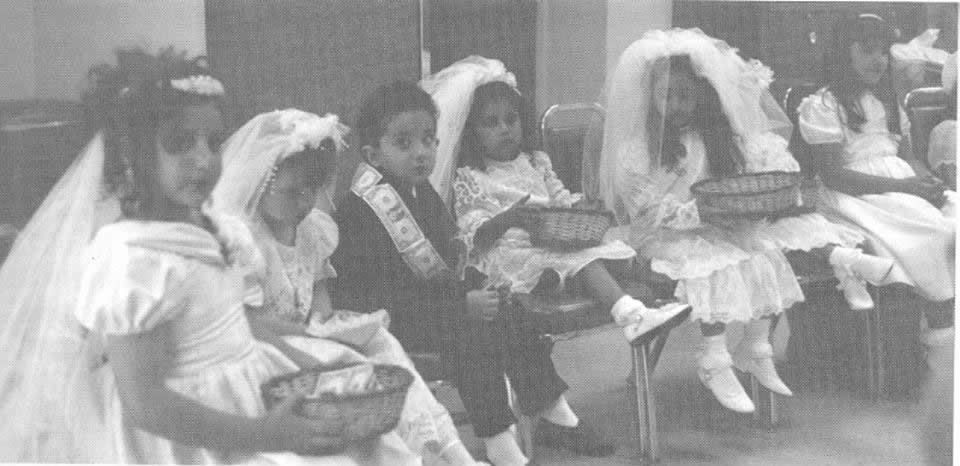 |
| May 1992: Several little Kaalu d’Sulaaqa “Brides” and one lone “Bridegroom, with their collection baskets during a celebration of the festival at Mar Zaia Church in Modesto, California.” |
But in recent years in this area of California (Modesto-Ceres-Turlock) Kaalu d’Sulaaqa was also observed by Assyrian American Association of Modesto club with a mammoth public open picnic and aired on the local TV channel. It was held in a public park for a nominal entrance fee, with food and drinks for sale and music and songs by professional bands for those who wanted to shake a leg and dance khigga. And several little girls would be dressed up as brides. They would walk around in a little parade, collecting money in small baskets or pails for a charitable cause.
This year, however, the AAAM club did not observe the festival. Instead, it was celebrated in similar fashion to a much smaller crowd in San Jose by Mar Yosip Khnanisho’s parish youth group and aired on Bet-Nahrain TV station. But the little “brides,” the main theme of the event, seemed to be missing from the celebration.
In earlier decades of the 20th Century, the festival used to be observed by young girls. In Assyrian town communities and villages in the Middle Eastern countries they would form into groups of several girls In the morning, each group would dress their prettiest girl as a bride and parade her around from house to house. Every family so visited would hand out the bridal party either some item of pastry or grocery or a few coins. The girls would have the collected food cooked and with the money they would buy fruit and confectionery for the celebration that would follow later, usually at one of the girls’ home. But in some places, especially in villages, the merrymaking would take place in a garden, orchard, or field. The girls would eat, drink tea, sing, dance, play games and be merry for the rest of the day. This mode of observance is till in practice in Assyrian rural communities in Iraq, Iran and Syria, and perhaps even in Russia.
In addition to the parading parties, in the 1940s and 1950s in the former Assyrian community of Habbaniya, Iraq, a large group of older girls and young mothers numbering a hundred or more, would also gather at the main social club. One or more beautiful maidens would be dressed like brides and one or more handsome girls would be attired as bridegrooms. Each of the celebrants would contribute some cooked food, pastry, confectionery or fruit, and the young men of the local band would usually offer their musical services for the occasion free of charge. The girls would spread their soupra (table cloth) of various food and delicacies, steam up their samovars and make merry for hours—eating, drinking, chatting, singing and dancing.
 |
1946: A group of maidens of one neighborhood of Civil Cantonment posing for a picture behind C-Type homes after celebrating Kaalu D’Sulaaqa festival. This was in the earlier years of Habbaniya before RAF
Assyrian Employees Club constructed its large building, with an
expansive lawn for such events during the summer months. |
Kaalu d’Sulaaqa has a dual traditional history, one religious and one national. In Assyrian Kaalu means bride and Sulaaqa is Christ’s Ascension. The bride symbolizes the Church and Christ is considered the Bridegroom. When Christ ascended to heaven, He left His Bride (the Church) in the care of His Disciples. They took the Bride around and introduced her to the world in the form of Christianity. The act of taking the Ascension Bride from house to house commemorates the Disciples’ evangelization work, the material donation made by each family to the Bride symbolizes the support for the Church, and the celebration is in joy of the Faith.
The national version, according to the Assyrian historian the late Menashi Amira, is that when Tamerlane, the Mongolian conqueror, sacked and ravaged Baghdad during his invasion of some countries in the East some six centuries ago, his armies also attacked the Assyrian villages and towns in what is now North Iraq, near the ancient Assyrian capital Nineveh. The Assyrians had then a mallik (chief) named Shallita Sahrouna. He was not only well educated and cultured but also courageous and wise. Realizing what was coming, Mallik Shallita rallied the Assyrian tribes around him to stand up against the barbarian invader. A fierce battle took place.
Because the Assyrian fighters were greatly out-numbered by their enemies, their women also joined the fight in support of their men. Mallik Shallita’s wife named Sharby organized and led the women in the desperate struggle. She dressed her daughter as a bride and ordered thousands of maidens to dress similarly and to cook and deliver pots of milk pottage to the battlefield to feed their fighting men and to bolster their morale. And despite heavy odds against them, the Assyrian tribes prevailed and managed to turn back the Mongolian hordes. But they lost countless men, property, and irreplaceable relics and manuscripts. And most of the bride-maidens, including Sharby and her daughter, perished in the battle. It is said Kaalu d’Sulaaqa celebration is in commemoration of that heroic but tragic episode in the history of our nation.
 |
1951. A group of Habbaniya maidens posing at the RAF Employees Assyrian Club following the celebration of Kaalu d’ulaaqa festival. In the center are
two ‘brides” and two “bridegrooms” along with a special guest, the
Officer In-charge of Civil Cantonment, Squadron Leader Quittenden. |
Yet another national version of the festival was put forward by the late Raabi John Alkhas. He wrote: “In the beginning only a small number of Assyrians received Christianity. The rest remained in their faith for a long time.
“As it is known now, during May the ancient Assyrians would observe the great feast of the goddess Baillit. It was during this feast that all the weddings would take place at the temples. After the official registration of the marriages, the brides and their bridegrooms would go around and visit the homes of their relatives to make known their marriage and to receive wedding gifts or, as we now say, to collect sabaghta.
“The feast of the Ascension of Our Lord to heaven also usually falls in the month of May. The Christianized Assyrians established this custom of taking little brides around on Ascension Day in a similar manner as the ancient Assyrian practice. That is why this tradition of Kaalu d’Sulaaqa has remained with us Assyrians till now. It would be a pity if it is forgotten.”
It would be indeed!
Mikhael K. Pius is a regular contributor to Zinda Magazine and the editor of the newsletter, Habbaniya Union School &
Community Association. Click here for more information.
Better Than Reading A Book
Helen Talia
Chicago
For some time now, I have wanted to cover a story on the life of an important Assyrian figure, someone who has lived an honest life, whose life has impacted others. Then one day the opportunity presented itself as I was attending ZOWAA's 27th annual anniversary dinner. Someone pointed out a distinguished gentleman with a small stature, wearing a navy-blue suit, carrying a cane in his hand. Naturally, I jumped up, having found the story I had been searching for. Little did I know that what I was about to step into would take me to places that would change my own perspective on how another person’s contributions from generations past have enabled my own generation to reap opportunities from, speaking one common dialect, to say the least.
 |
Mr. Shmoel Baba |
I write this story as honestly as I can, presented to me by Mr. Shmoel Baba, one whose son is widely known and loved by the Chicago Assyrian community, Mr. Hanny Baba. But Senior Mr. Baba does not need an entourage to draw attention to his case; his contributions to our community are many, and widely recognized by Kirkukians from Iraq. I am humbled to have been given the opportunity to be welcomed to journey back into one man’s life whose devotion to a cause and sincerity to his community has been profound. Let me present the story. I hope to do justice to these accounts from this life.
Background – Raabi Shmoel Baba does not have a fairytale life story at the earlier years of his life to share, but he insists that God does not take away from a man from all directions. 1918, at the age of three, his family was set en route Hamadan to refugee camps in Baaqouba. “My family was there. My father, Shamasha Babo – a Catholic deacon, who had previously visited the U.S., was made head of one of the groups traveling,” says Baba. Many Assyrians died unaccounted for and without burial sites, including his grandfather, Samuel, a heart surgeon, recalls Baba with tears welling in his eyes.
Between Iran and the British governments the fate of Assyrians had been sealed, to bring them from Urmia into refugee camps. He recalls how prominent and educated the Assyrians were in Urmia. When former King Shah of Iran visited Urmia to see that the English and American missionaries had already arrived and involved in Urmian lives, he changed the name of Urmia to Rizaiiya. In fact, when he met Shmoel’s uncle, a graduate doctor from The University of Vienna, he changed his name to Loukman; a name that his mother’s family would be legally given from that point on.
The early years - Upon arriving in Iraq, the Baba family established in Mosul, with some Assyrians domiciling in Dawasa because of their following of Mar Esha Shimun, while others Raabi Yousep
Kelaita. Determined to follow in his family’s footsteps of prominent doctors and educators, Shmoel finished secondary education in Mosul. Interested in attending medical school like many of his family members before him, he was required an Iraqi citizenship. When applied, he was denied, for obvious reasons; he was not an Iraqi born. As a second choice, he opted for the education field, and in the following four years (c. 1937-1941), he taught in an Armenian school, quickly becoming a household name in every Armenian family, one that everyone adored and called to Baron Samuel.
During WW II, he left the Armenian school and went to work for the Mail Censorship for the next three years. The shifts in personnel lead him to the right persons that would help him attain his Iraqi citizenship sometime in 1936–1937. Then by the end of the war, the Mail Censorship closed down, which brought him to Kirkuk to work for the Engagement Office.
L i n d a B a d a l o f |
 |
I'm just a phone call away!
24200 Magic Mountain Pkwy.,105, Valencia, California 91355
Direct Phone: (661) 287-3200 x3468 Cellular: (661) 645-4290
Email: LindaBadalof@SCVFineHomes.com
|
Kirkuk 1948 - Following the end of World War II, when Shmoel Baba arrived in Kirkuk, the Assyrian school had already been established. It had been fully licensed since 1921 by Raabi Daoud Bazi to teach first through fourth grades in Assyrian, Arabic and English. David Malik Esmail, the then Honorary Principal of the Assyrian school of Kirkuk, was moving post to accept employment in Shirgat – Ain Zahla. “The school’s committeeman Atto Paris approached me about accepting the Principal’s position as the school was in dire need of a new head. I accepted, and in the next few years the school saw changes.”
Among Raabi Shmoel Baba’s contributions were immediately raising funds to buy a new school home, a necessity due to size and health hazards. The new school floors would have to be paved from gravel into a flat surface. As fate would have it, Baba was soon in touch with Mr. David Kalo, an Assyrian nationalist, who donated countless bags of cement and placed the school in touch with a volunteer contractor, Mr. Polus Oda, whose efforts helped pave a school playground for the children. Additionally, Baba insisted on an acting stage as many of their students had acting abilities and other talents. At the fundraiser gala, His Beatitude, the late Mar Yousep Khnanisho, the Metropolitan of Baghdad, was invited to the opening ceremony, along with his brother, Mr. Rouel Khnanisho, the Consulate Secretary of Britain, and other dignitaries. “I still recall it was a rainy day,” says Shmoel.
No job is too small – “One too many nights I was sleepless thinking about the students who had completed fourth grade, they were losing scholastic period when moving into the public school system because they had to repeat the fourth grade, due to their lack of Arabic language skills when tested for entrance into the public school system. And so I wrote a letter to the Ministry of Education to acquire accreditation for fifth and sixth grades. The year that the sixth grade was granted to our school, out of 19 students who were in sixth grade, 16 passed, while 3 were held back. That summer I tutored all three students in every subject in my home. Their determination along with my dedication, all three passed. I was very pleased,” shares Baba.
Born in Urmia, Shmoel Baba was destined to become a fighter, a survivor and his determination has helped enrich a fully accredited Assyrian school in Kirkuk that has given education and prosperity to many generations. At the age of 91, he continues to write poetry, and speak of his love for his wife Janet, whom had been with him since 1944 until the latter months. Listening to Mr. Baba speak about life not only is interesting, but allows for one to assess the mobility of one’s own life and how well it is in accord with a purpose.
Shouma, as he is called by his friends, has been a prominent educator, poet, soccer and basketball player, an artist, who shared with us several pieces of poetry, oil paintings, and carpet mending.
The Inspiration - He smiles while sharing scripts from his life; the feelings are so tender as if they can be touched, the fresh paint inside the classrooms smelled. Somehow the stories that have happened more than 50 years ago come to life. You visit the neighborhoods, the students, and even hear the school bell ring. In memory, they will live on… Daoud Bazi, whom from the beginning had licensed the school for four grades, the illustrious Raabi Jibrael Babilla, an English and Assyrian educator, recognized for translating Shakespearean dramas.
“These are the people responsible for making it all happen,” says Baba, showing pictures of the instructors and administrators of the Assyrian school in Kirkuk. “I did not do anything, I did not make any contributions.” His stories uniformly taking the listener from childhood into adulthood, “I was the kid who was raised by my uncle AMI JAN, after my parents’ passing, selling cakes, running around barefoot to make the school bell. But I was determined…and so I survived.”
“Remember the story I told you in the beginning,” concludes Baba, “I said that God does not take away from a man from all directions. My three children are my pillars – Hilda, Helen, and Hanny. Along with each of my children and their families, the Lord has blessed me to become as complete as any man can be; giving me repeated opportunities and accountability for the lives of each one of my students whose lives I hope to have enriched. He has graced me with a beautiful “Chalta” – Shameran, whom I have come to live with since my beautiful wife’s passing.”
Remembering the stories, now in memories only, brought smiles, and tears, alike, to everyone listening. Mr. Shmoel Baba was born on June 7th, 1915. He still remembers his age to the date, by the way.
|
Bravo
Assyrians at Their Best
|
|
UNESCO intends to Put the Magic Back in Babylon
Jeffrey Gettleman
The New York Times
21 April 2006
In the ancient city of Babylon in Iraq, it is hard to tell what are ruins and what is just ruined.
Crumbling mud-brick buildings, some 2,500 years old, look like smashed sandcastles at the beach. Signs of military occupation are everywhere: trenches, bullet casings, shiny coils of razor wire and blast walls stamped "This side Scud protection."
Babylon, the city with the million- dollar name, has paid the price of war. It has been ransacked, looted, torn up, paved over, neglected and roughly occupied. Archaeologists said American soldiers had even used soil thick with priceless artifacts to stuff sandbags.
But Iraqi leaders and UN officials are not giving up on it. They are working assiduously to restore Babylon, home to the Hanging Gardens, one of the Seven Wonders of the Ancient World. They want to turn it into a cultural center and possibly even an Iraqi theme park.
No one is saying it is going to happen any time soon, but what makes the Pollyannaish project even conceivable is that the area around Babylon is among the safest in Iraq, a beacon of civilization once again in a land of much chaos.
 |
Click Image to Order Your Copy |
Ancient Babylon, celebrated as a fount of law, writing and urban living, sits just outside the modern city of Hilla, about 100 kilometers, or 60 miles, south of Baghdad. Hilla is neither haunted by Sunni insurgents nor overwhelmed by Shiite militia and, while it is home to both Shiites and Sunnis, it has not been afflicted by the sectarian violence that has paralyzed so many other parts of Iraq.
Emad Lafta al-Bayati, Hilla's mayor, has big plans for Babylon. "I want restaurants, gift shops, long parking lots," he said. God willing, he added, maybe even a Holiday Inn.
The UN Educational, Scientific and Cultural Organization is pumping millions of dollars into Babylon and a handful of other sites. It has even printed a snazzy brochure to give to wealthy donors. "Cultural tourism could become Iraq's second biggest industry, after oil," explained Philippe Delanghe, a United Nations official helping with the project.
But before Iraq becomes the next Egypt, he said wryly, "a few little things have to happen." One of those, of course, is better security. The U.S. military maintains bases near Babylon but next month, in a sign of how stable the area has become, most troops will head north to Baghdad, where they are needed more.
Many Iraqis said it was about time. Occupying forces have been blamed for much of Babylon's recent demise.
Donny George, head of Iraq's board of antiquities, said Polish troops dug trenches through an ancient temple and American contractors paved over ruins to make a helicopter landing pad.
"How are we supposed to get rid of the helipad now?" George asked. "With jackhammers? Can you imagine taking a jackhammer to the remains of one of the most important cities in the history of mankind? I mean, come on, this is Babylon."
Babylon. Its name has had a magical ring since time immemorial. The history begins with Hammurabi, the Babylonian king who ruled from 1792 to 1750 B.C. and is credited with one of the first sets of codified law.
After Hammurabi, Babylon fell to the Hittites. But a mere thousand years later, the city flourished again under the reign of King Nebuchadnezzar II, who ruled from around 605 to 562 B.C. Nebuchadnezzar is best known for the hanging gardens he supposedly built for his wife, who was from the mountains and missed greenery.
Herodotus, the ancient Greek scholar, was so wowed that he wrote Babylon "surpasses in splendor any city in the known world." But most of the splendor was made from mud. There was not a lot of stone handy in Babylon, and its sun- dried mud-brick monuments did not last like the Egyptian pyramids or the Roman Forum. As rivers swelled and desert sands shifted, Babylon crumbled.
To make matters worse, colonial powers carted away some of the most precious artifacts that did survive. The Germans took the Ishtar Gate, the French grabbed ceramics and the Turks used the bricks, some of which still bore Nebuchadnezzar's name, to build dams on the Euphrates.
Then Saddam Hussein arrived. And if anyone had big Babylon plans, he did.
He started in 1985 with a project that was part restoration, part new construction and all ego. He imported thousands of Sudanese laborers - Iraqis were tied up with the Iran-Iraq war - to build an ancient-looking palace right on top of Nebuchadnezzar's original one. Walls more than 12 meters high and stamped with Saddam's name replaced the stumpy mounds of biblical-age mud. To be fair, Saddam did shore up Processional Way, a wide boulevard of ancient stones, and the Lion of Babylon, a black rock sculpture about 2,500 years old.
After the first Gulf War, he commissioned a modern palace, again over some ruins, done in the pyramidal style of a Sumerian ziggurat. He called it Saddam Hill. In 2003, he was about to begin construction on a cable car line stretching over Babylon when the U.S. invasion got in the way.
U.S. marines stormed up the Euphrates River valley on their way to Baghdad and turned Saddam Hill into a base. Their graffiti is still scrawled on the walls, including "Hi Vanessa. I love you. From Saddam's palace" and "Cruz chillen' in Saddam's spot." But more serious than graffiti, archaeologists said, was the use of heavy equipment in the area, like helicopters and armored vehicles, which may have pulverized fragile ruins just below the surface.
George, who was field director for Babylon in 1986, said he remembered once scraping a few inches beneath the topsoil and unearthing a "wonderful, little plate."
"So just imagine what we have lost," he said. Looters did not help either. After the invasion, a swarm of thieves descended on Iraq and picked clean countless of Iraq's more than 10,000 historic sites. Babylon was not as badly hit as others, but many of its prized artifacts disappeared from museums. By summer 2003, cuneiform tablets, among the oldest examples of writing, were being sold on E-bay.
But even George is not dispirited. "One day millions of people will visit Babylon," he said. "I'm just not sure anybody knows when."
BABYLON, Iraq In this ancient city, it is hard to tell what are ruins and what is just ruined.
 |
Crumbling mud-brick buildings, some 2,500 years old, look like smashed sandcastles at the beach. Signs of military occupation are everywhere: trenches, bullet casings, shiny coils of razor wire and blast walls stamped "This side Scud protection."
Babylon, the city with the million- dollar name, has paid the price of war. It has been ransacked, looted, torn up, paved over, neglected and roughly occupied. Archaeologists said American soldiers had even used soil thick with priceless artifacts to stuff sandbags.
But Iraqi leaders and UN officials are not giving up on it. They are working assiduously to restore Babylon, home to the Hanging Gardens, one of the Seven Wonders of the Ancient World. They want to turn it into a cultural center and possibly even an Iraqi theme park.
No one is saying it is going to happen any time soon, but what makes the Pollyannaish project even conceivable is that the area around Babylon is among the safest in Iraq, a beacon of civilization once again in a land of much chaos.
Ancient Babylon, celebrated as a fount of law, writing and urban living, sits just outside the modern city of Hilla, about 100 kilometers, or 60 miles, south of Baghdad. Hilla is neither haunted by Sunni insurgents nor overwhelmed by Shiite militia and, while it is home to both Shiites and Sunnis, it has not been afflicted by the sectarian violence that has paralyzed so many other parts of Iraq.
Emad Lafta al-Bayati, Hilla's mayor, has big plans for Babylon. "I want restaurants, gift shops, long parking lots," he said. God willing, he added, maybe even a Holiday Inn.
The UN Educational, Scientific and Cultural Organization is pumping millions of dollars into Babylon and a handful of other sites. It has even printed a snazzy brochure to give to wealthy donors. "Cultural tourism could become Iraq's second biggest industry, after oil," explained Philippe Delanghe, a United Nations official helping with the project.
But before Iraq becomes the next Egypt, he said wryly, "a few little things have to happen." One of those, of course, is better security. The U.S. military maintains bases near Babylon but next month, in a sign of how stable the area has become, most troops will head north to Baghdad, where they are needed more.
Many Iraqis said it was about time. Occupying forces have been blamed for much of Babylon's recent demise.
Donny George, head of Iraq's board of antiquities, said Polish troops dug trenches through an ancient temple and American contractors paved over ruins to make a helicopter landing pad.
"How are we supposed to get rid of the helipad now?" George asked. "With jackhammers? Can you imagine taking a jackhammer to the remains of one of the most important cities in the history of mankind? I mean, come on, this is Babylon."
Babylon. Its name has had a magical ring since time immemorial. The history begins with Hammurabi, the Babylonian king who ruled from 1792 to 1750 B.C. and is credited with one of the first sets of codified law.
After Hammurabi, Babylon fell to the Hittites. But a mere thousand years later, the city flourished again under the reign of King Nebuchadnezzar II, who ruled from around 605 to 562 B.C. Nebuchadnezzar is best known for the hanging gardens he supposedly built for his wife, who was from the mountains and missed greenery.
Herodotus, the ancient Greek scholar, was so wowed that he wrote Babylon "surpasses in splendor any city in the known world." But most of the splendor was made from mud. There was not a lot of stone handy in Babylon, and its sun- dried mud-brick monuments did not last like the Egyptian pyramids or the Roman Forum. As rivers swelled and desert sands shifted, Babylon crumbled.
To make matters worse, colonial powers carted away some of the most precious artifacts that did survive. The Germans took the Ishtar Gate, the French grabbed ceramics and the Turks used the bricks, some of which still bore Nebuchadnezzar's name, to build dams on the Euphrates.
Then Saddam Hussein arrived. And if anyone had big Babylon plans, he did.
He started in 1985 with a project that was part restoration, part new construction and all ego. He imported thousands of Sudanese laborers - Iraqis were tied up with the Iran-Iraq war - to build an ancient-looking palace right on top of Nebuchadnezzar's original one. Walls more than 12 meters high and stamped with Saddam's name replaced the stumpy mounds of biblical-age mud. To be fair, Saddam did shore up Processional Way, a wide boulevard of ancient stones, and the Lion of Babylon, a black rock sculpture about 2,500 years old.
After the first Gulf War, he commissioned a modern palace, again over some ruins, done in the pyramidal style of a Sumerian ziggurat. He called it Saddam Hill. In 2003, he was about to begin construction on a cable car line stretching over Babylon when the U.S. invasion got in the way.
U.S. marines stormed up the Euphrates River valley on their way to Baghdad and turned Saddam Hill into a base. Their graffiti is still scrawled on the walls, including "Hi Vanessa. I love you. From Saddam's palace" and "Cruz chillen' in Saddam's spot." But more serious than graffiti, archaeologists said, was the use of heavy equipment in the area, like helicopters and armored vehicles, which may have pulverized fragile ruins just below the surface.
George, who was field director for Babylon in 1986, said he remembered once scraping a few inches beneath the topsoil and unearthing a "wonderful, little plate."
"So just imagine what we have lost," he said. Looters did not help either. After the invasion, a swarm of thieves descended on Iraq and picked clean countless of Iraq's more than 10,000 historic sites. Babylon was not as badly hit as others, but many of its prized artifacts disappeared from museums. By summer 2003, cuneiform tablets, among the oldest examples of writing, were being sold on E-bay.
But even George is not dispirited. "One day millions of people will visit Babylon," he said. "I'm just not sure anybody knows when."
|
|
Thank You
The following individuals contributed to the publication of this issue:
|
| Broula N. Adde |
New Jersey |
| Andre Anton |
Michigan |
| Dr. Matay Beth Arsan |
Holland |
| Mazin Enwiya |
Chicago |
Filham Y. Isaac |
Canada |
| Nahrain E. Kamber |
California |
| Youkie Khaninia |
Arizona |
| Dean Kalimniou |
Australia |
| Nineb Lamassu |
United Kingdom |
| Joseph Tamraz |
Chicago |
|
ZINDA Magazine is published weekly. Views expressed in ZINDA do not necessarily represent those of the ZINDA editors, or any of our associated staff. This publication reserves the right, at its sole discretion, not to publish comments or articles previously printed in or submitted to other journals. ZINDA reserves the right to publish and republish your submission in any form or medium. All letters and messages require the name(s) of sender and/or author. All messages published in the SURFS UP! section must be in 500 words or less and bear the name of the author(s). Distribution of material featured in ZINDA is not restricted, but permission from ZINDA is required. This service is meant for the exchange of information, analyses and news. Any material published in Zinda Magazine will not be removed later at the request of the sender. For free subscription to Zinda Magazine, send e-mail with your name, address, telephone number to: zcrew@zindamagazine.com.
ZINDA means "Spark of Fire" in modern Syriac (Assyrian); Zinda's Red Swoosh is a rendering of the seventh letter in the Assyrian alphabet, letter ZEN, and the first letter in the word "Zinda". For more information about the Assyrian culture and heritage write to Zinda Magazine.
Zinda Magazine™ Copyright © Zinda Inc., 1994-2006 - All Rights Reserved - www.zindamagazine.com |